

UW-MADISON
ARBORETUM


This land is sacred. Its energy and abundance have sustained Wąąkšikra from time immemorial. It sings to our community
and transforms all who listen.

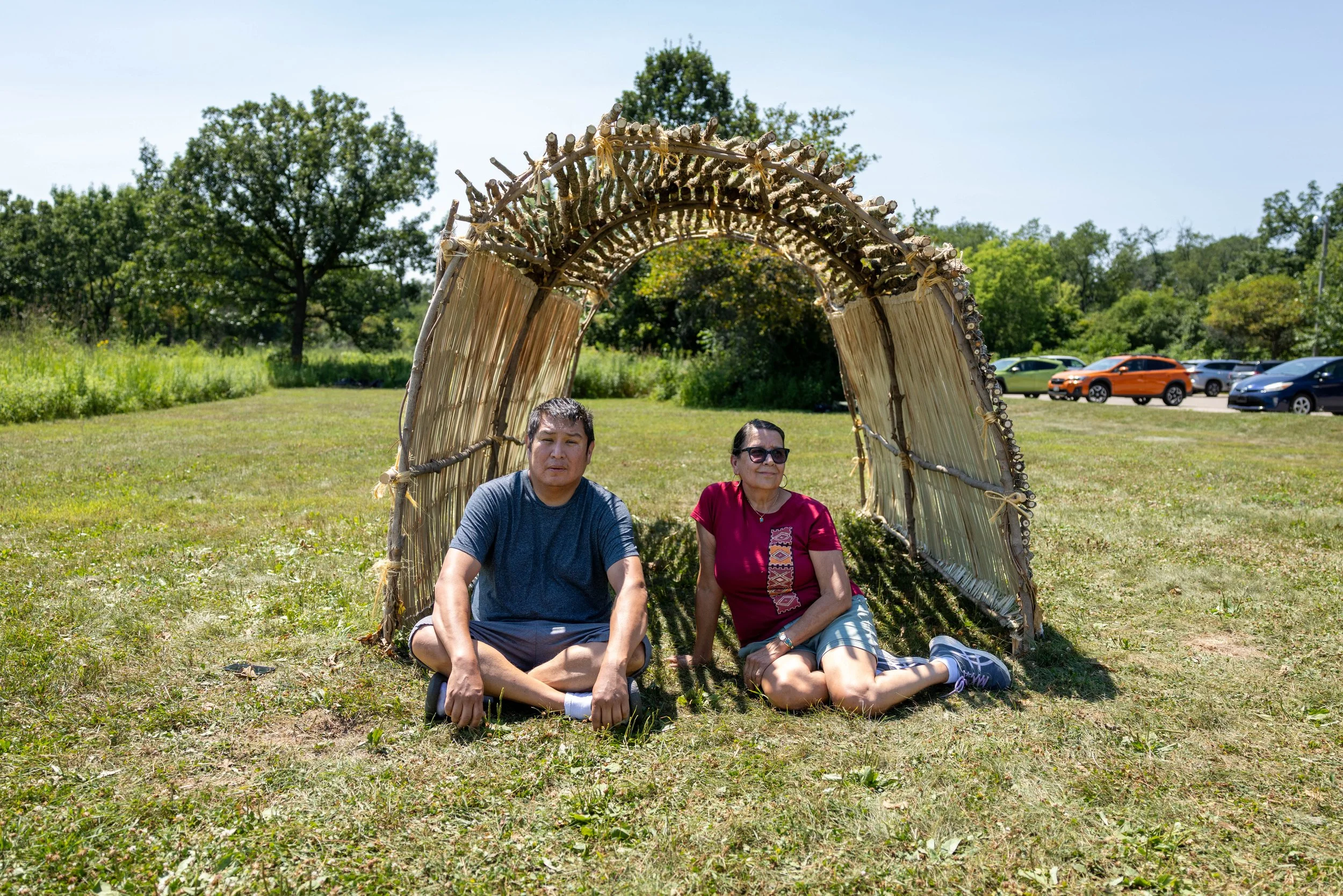
Hazac Mąą
Melanie Tallmadge Sainz (Hoocąk)
Lightning the Earth New Rider (Hoocąk / Oneida)
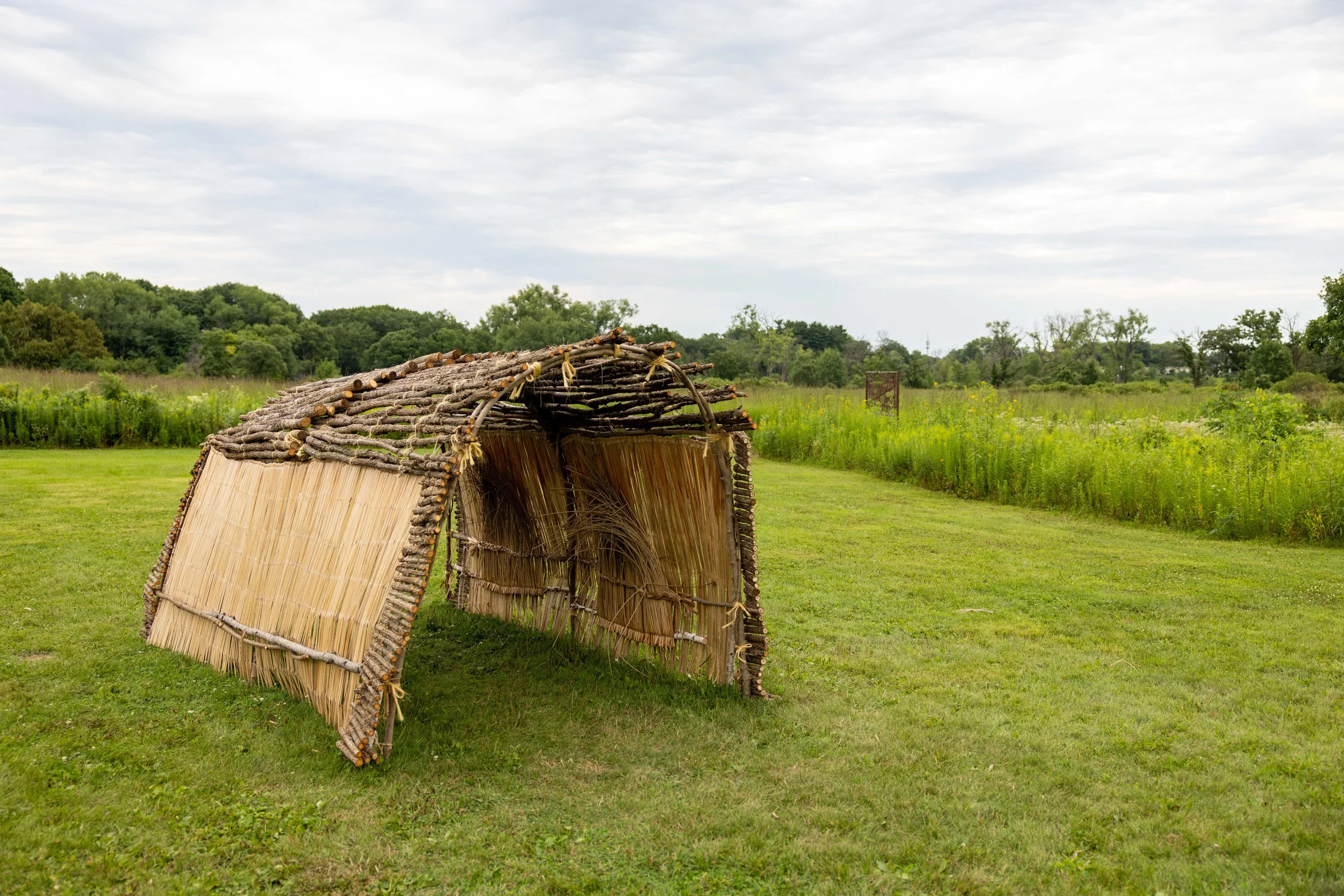
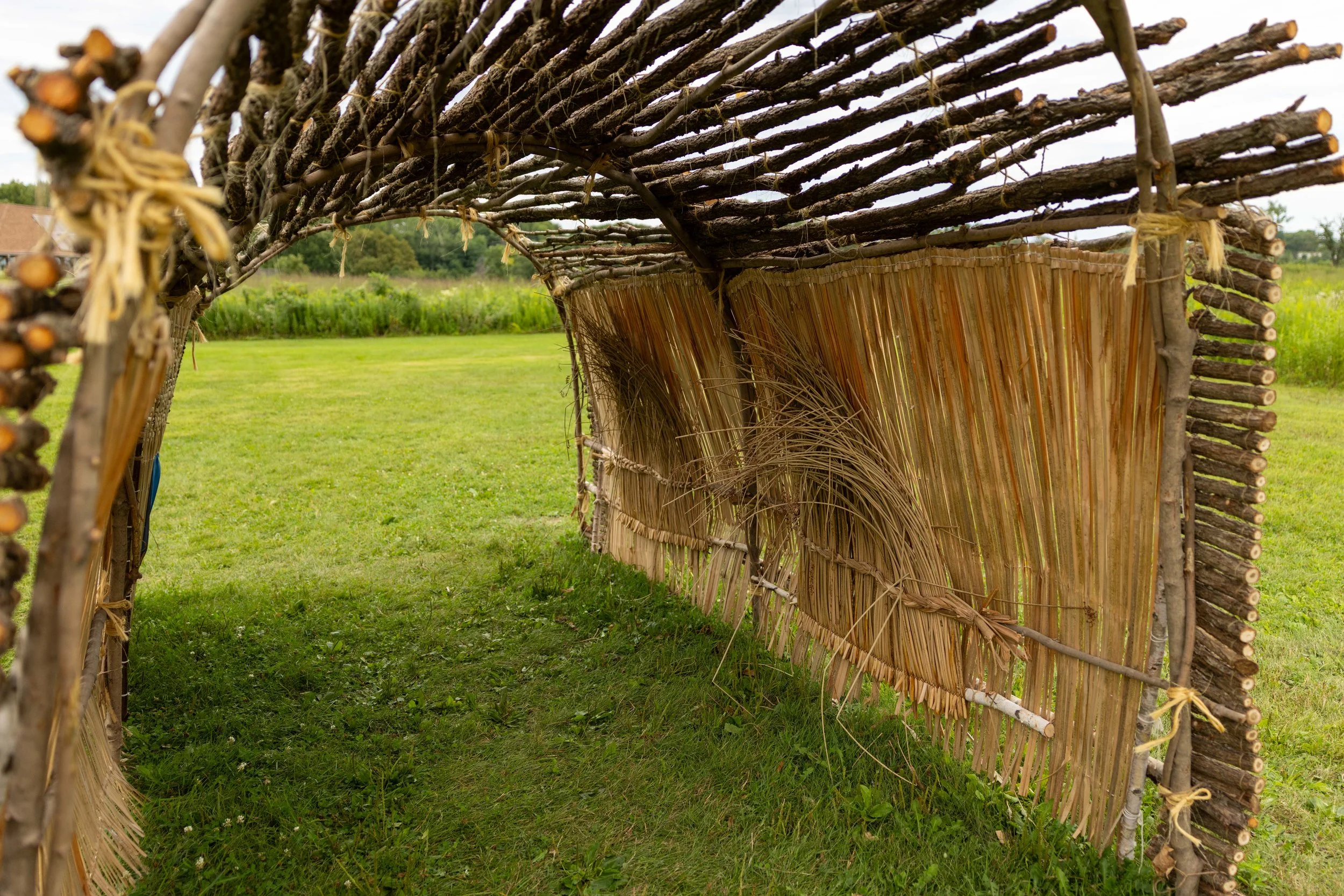
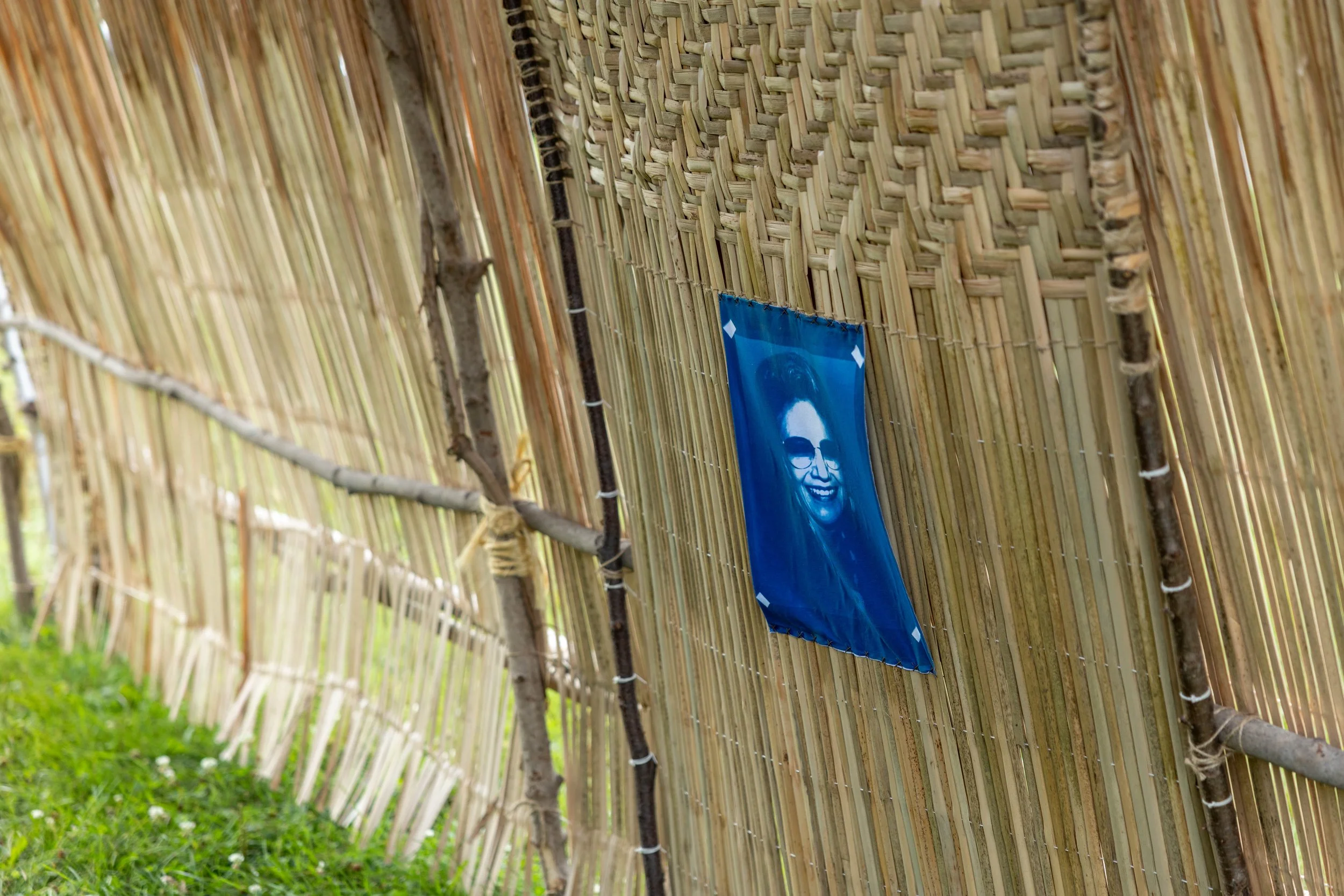
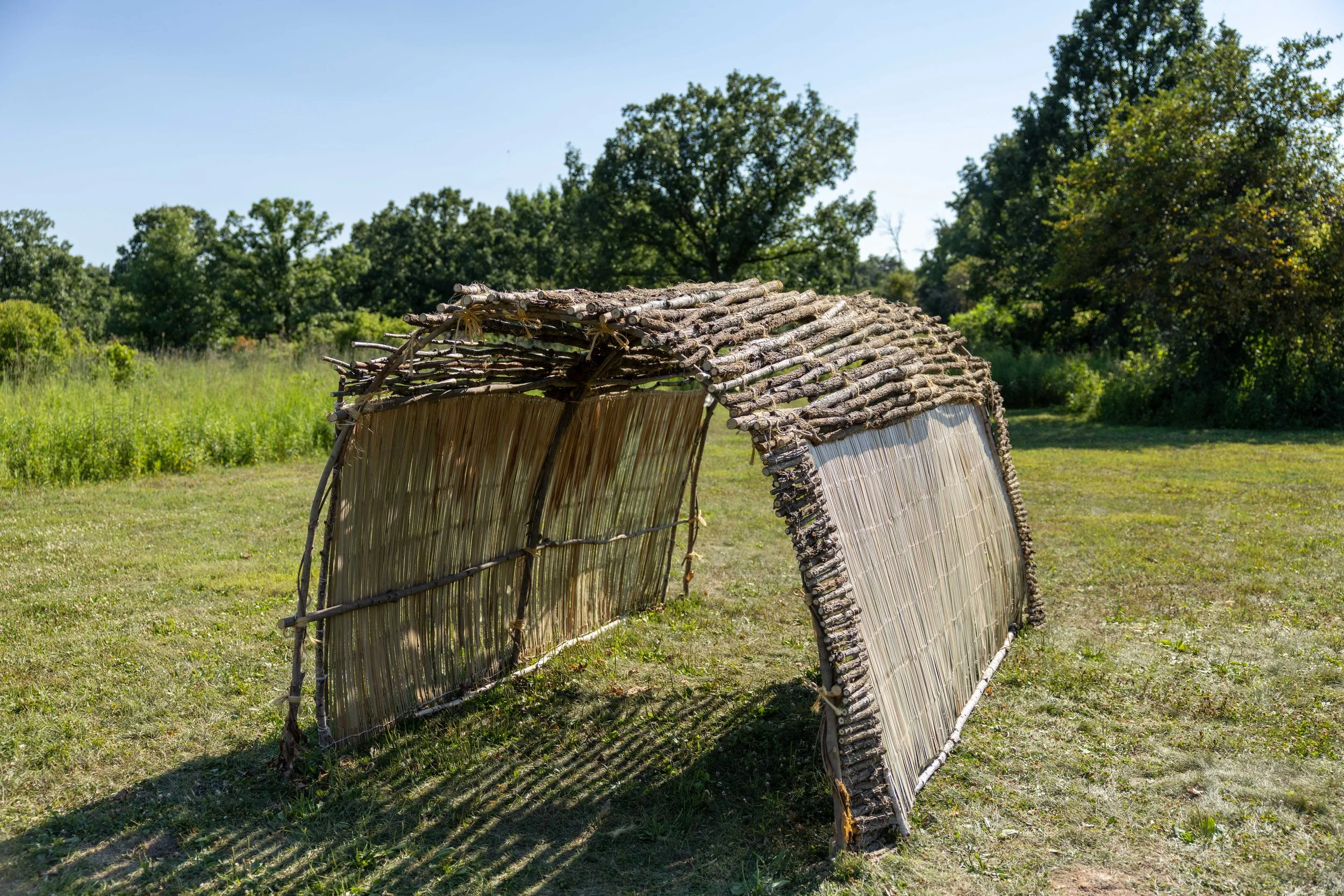
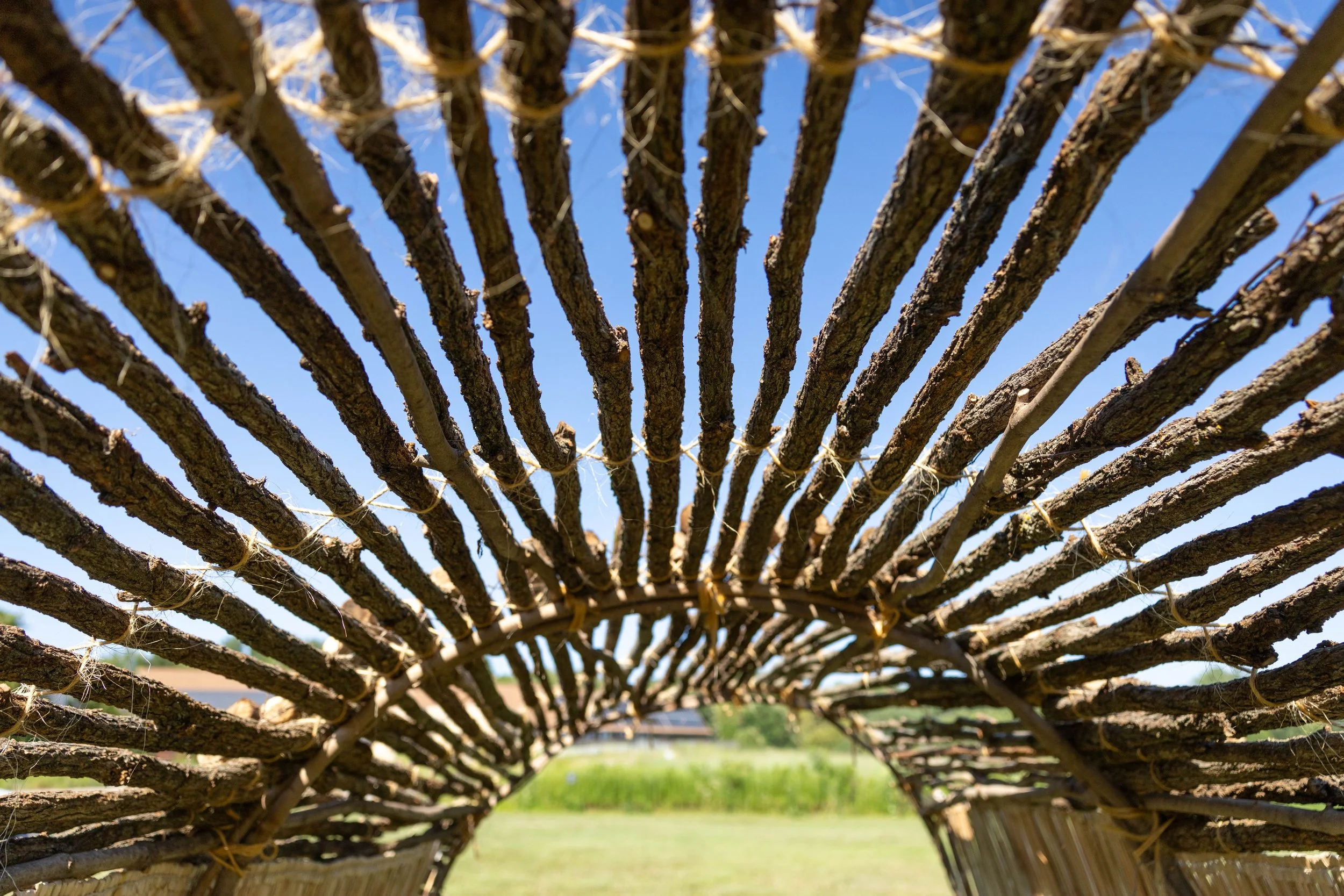
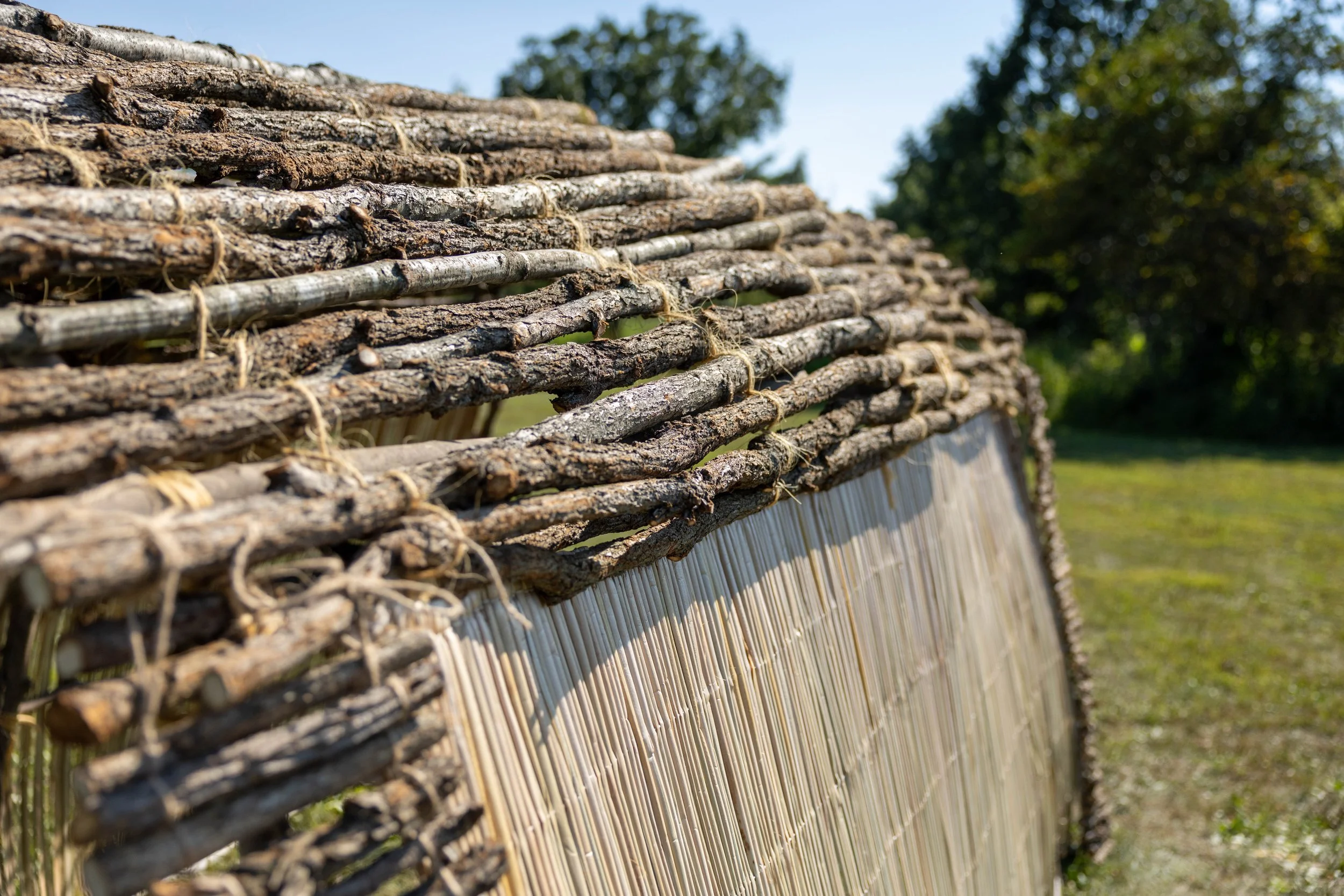
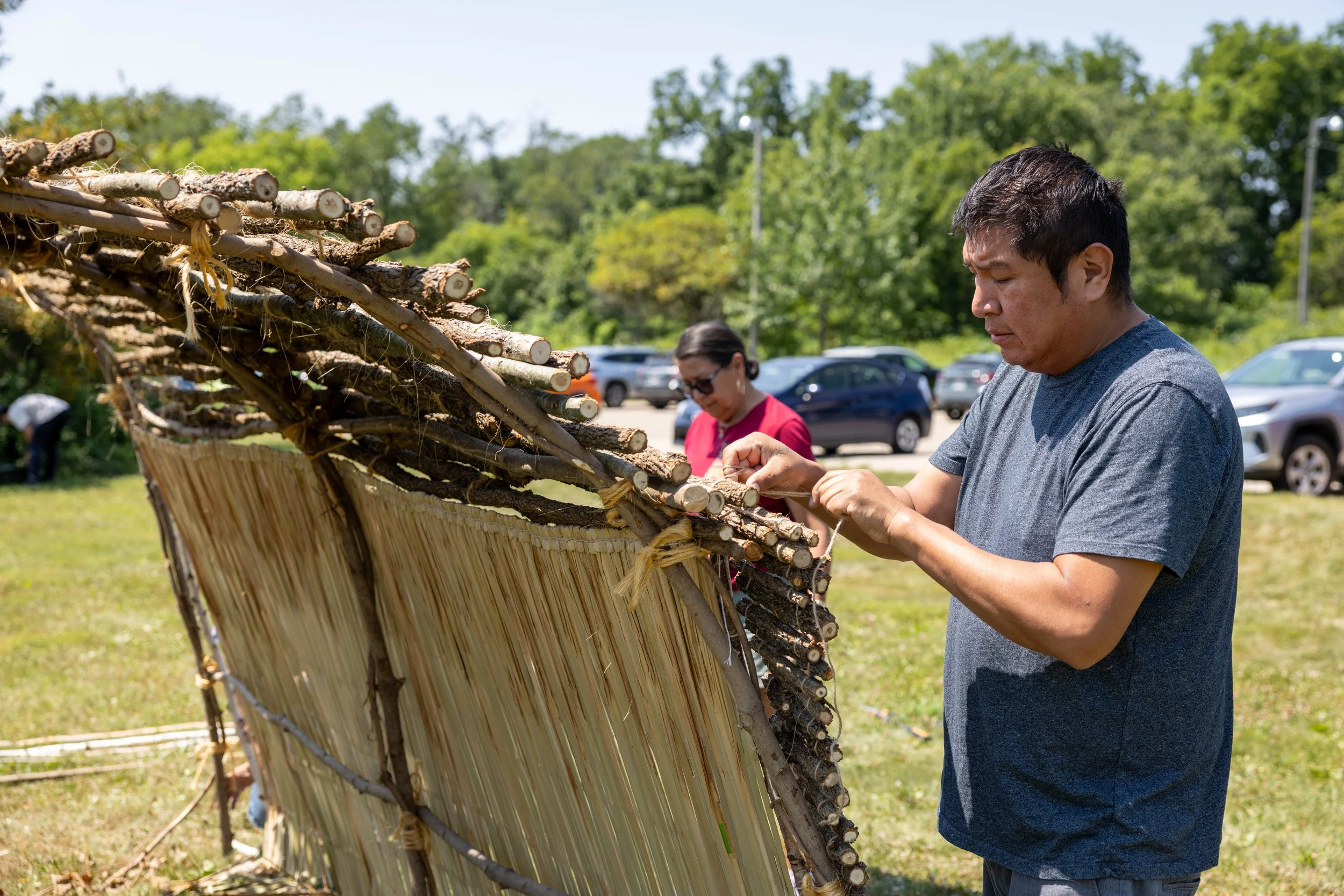
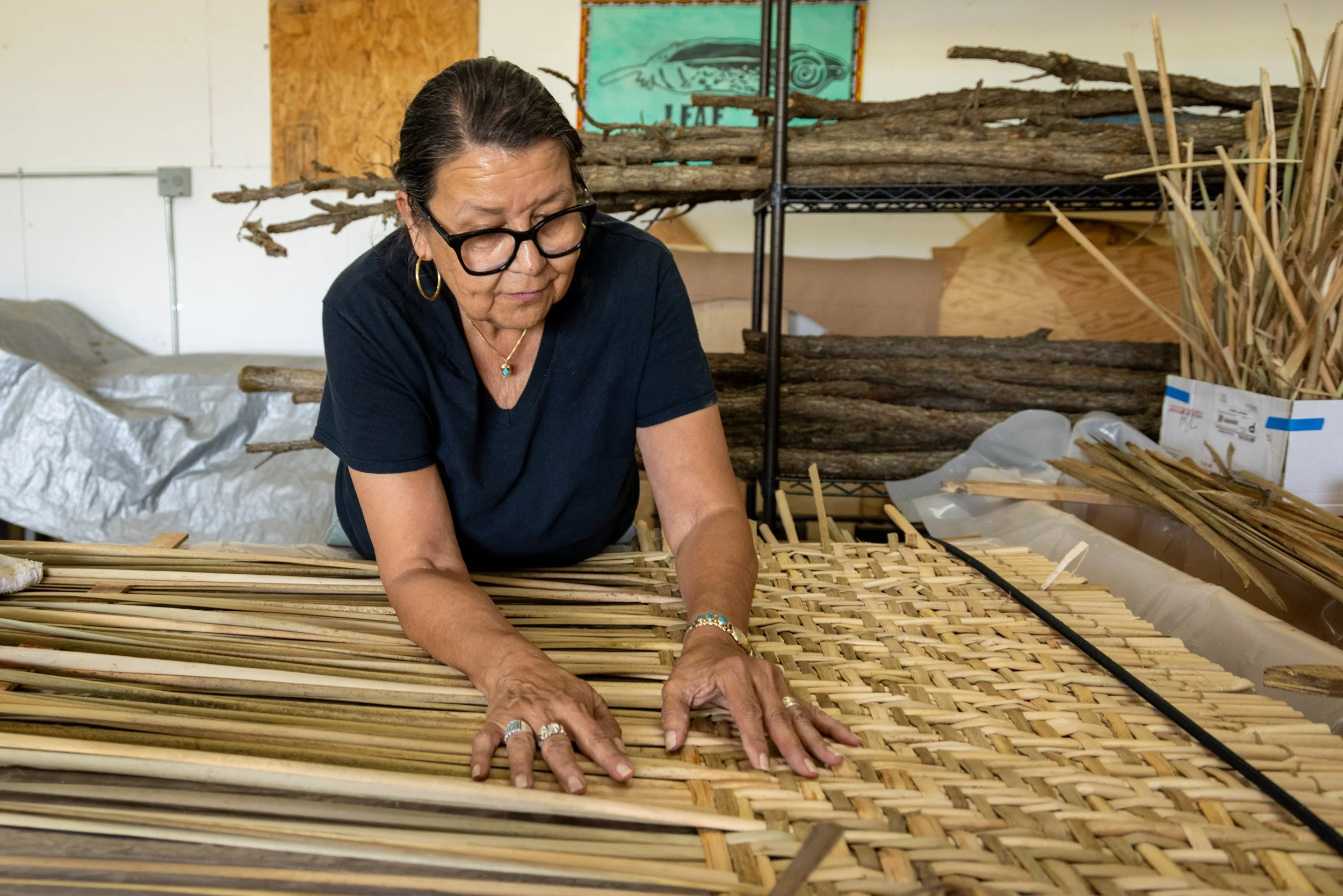
Hazac Mąą (English translation: Earth Shelter) is a three-dimensional temporary mixed media sculpture designed with cultural and historical connections to the land and legacy of the Arboretum site in Teejop (English translation: Four Lakes). This project represents a collaboration of Ho-Chunk artists Melanie Tallmadge Sainz (founding Director of Little Eagle Arts Foundation - LEAF) and her son (in the Ho-Chunk way) Lightning the Earth New Rider. Lightning is a new and emerging visual artist and a skilled maker of ciipodoke (also known as a wigwam form) and hazac (temporary shade or ramada form) frames made with tamarack or maple saplings. Lighting will create the hazac frame of foraged saplings. The frame will be covered with bark and hand-made cattail mats woven by Melanie Tallmadge Sainz, Lightning, and invited community members who want to learn the process. Inside of the form will be a variety of images created on small mats constructed of cattail and/or bulrush along or paper made from cattail.
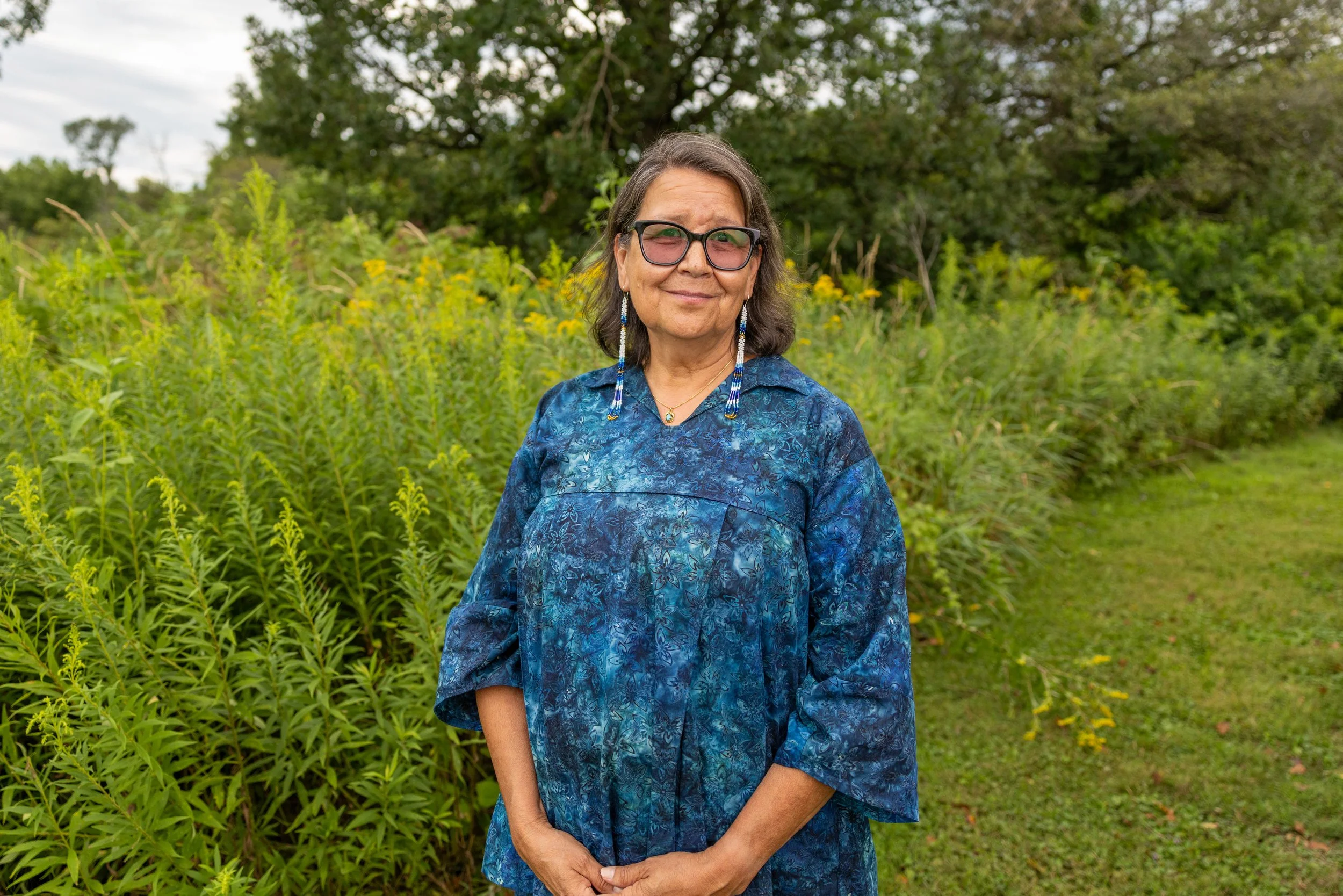
I’m an enrolled member of the Ho-Chunk Nation of WI. My mother Bernadine Miner Tallmadge and my mother’s sister Dr. Helen Miner Miller were a part of the original tribal council that worked to get our tribe federal recognition in 1963. As a child of these fabulous women and role models I have done my best to represent my Ho-Chunk people at many gatherings and events throughout my lifetime.
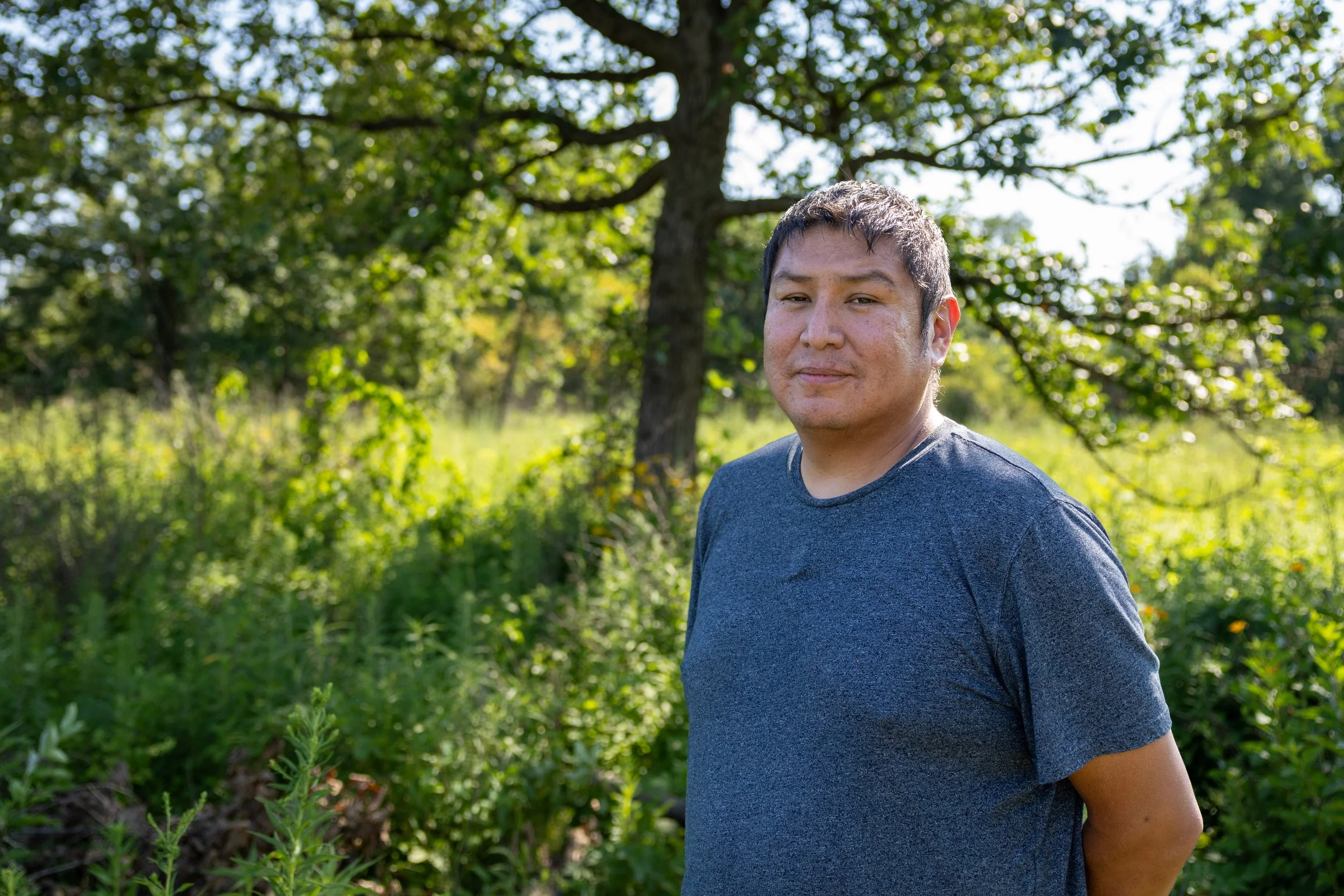
Lightning New Rider is a Ho-Chunk Nation Bear Clan member motivated to care for his community through Ho-Chunk traditional foods. Lightning is the Garden Coordinator for Wild Bearies in Wisconsin Dells and the Little Eagle Art Foundation L.E.A.F. consultant at Mąą Wakącąk.
Tsé' Bahane'
Dakota Mace (Diné)
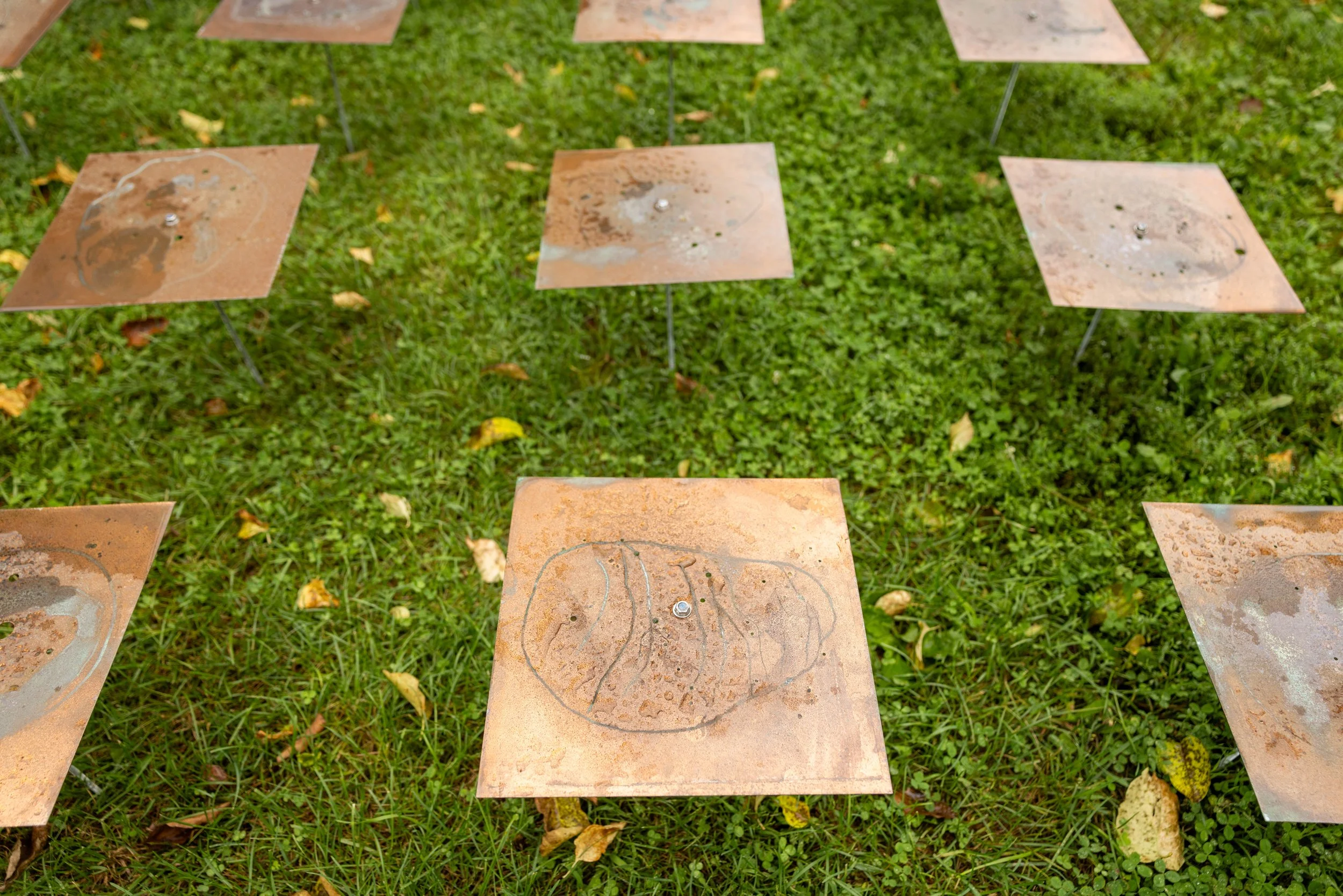
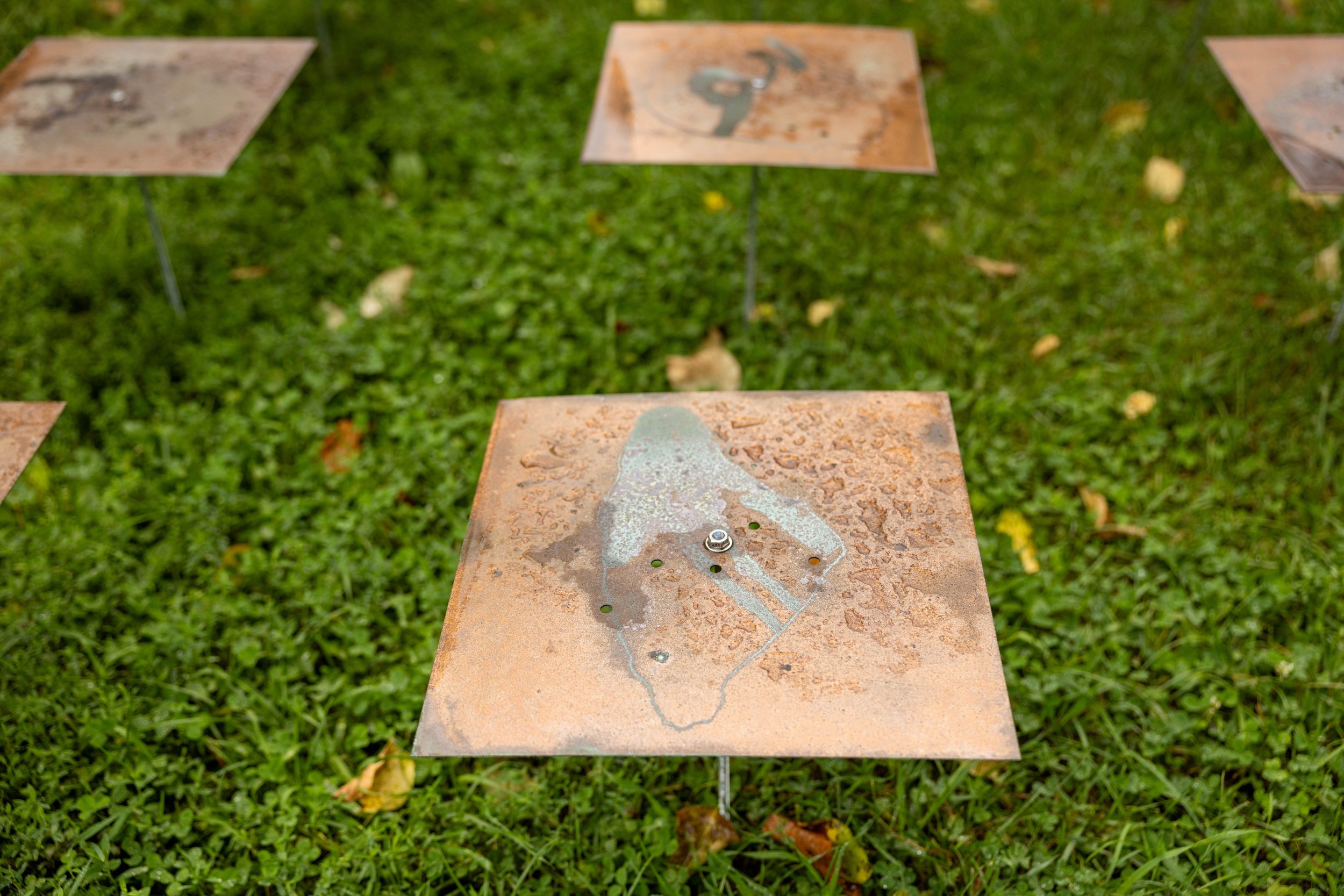
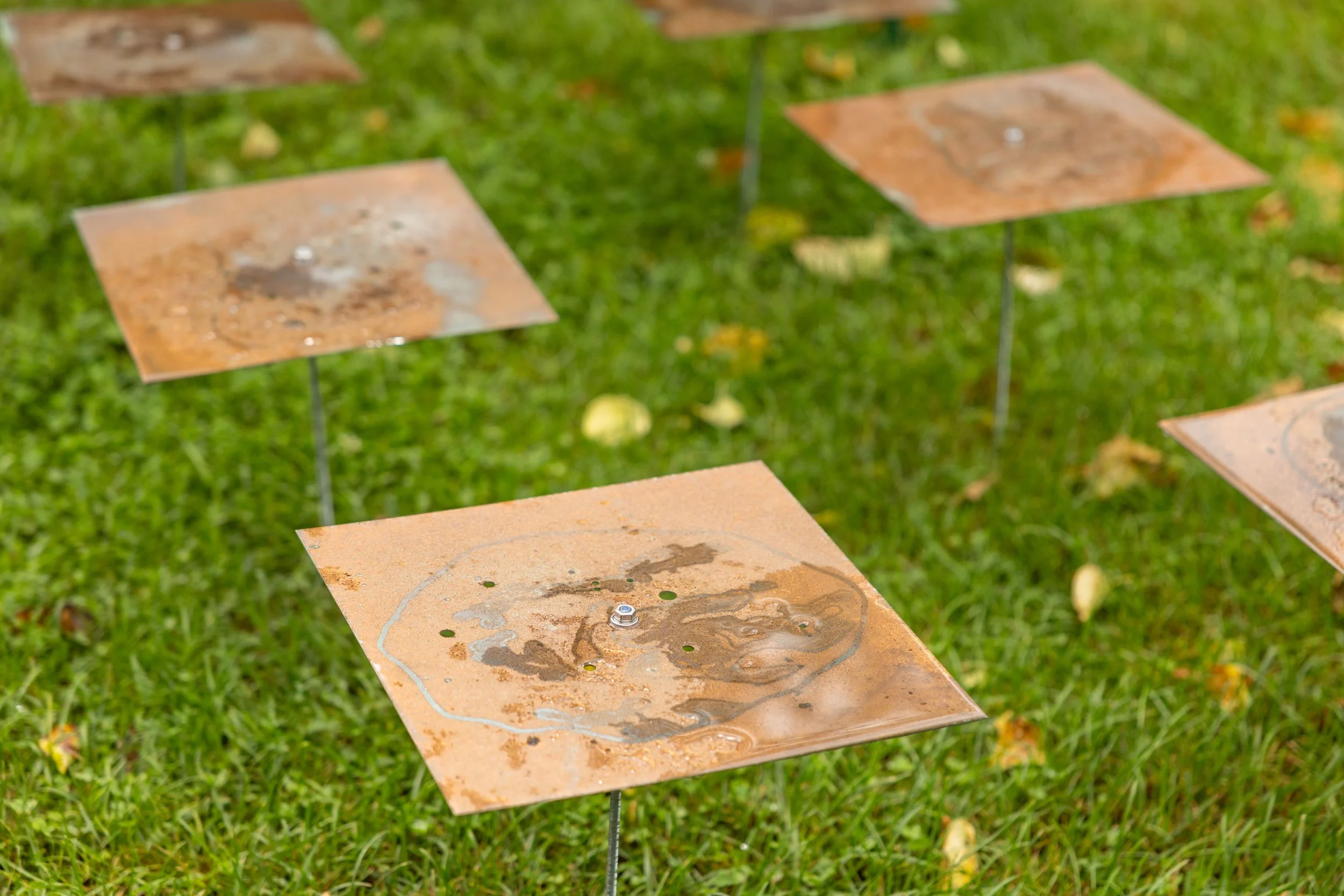
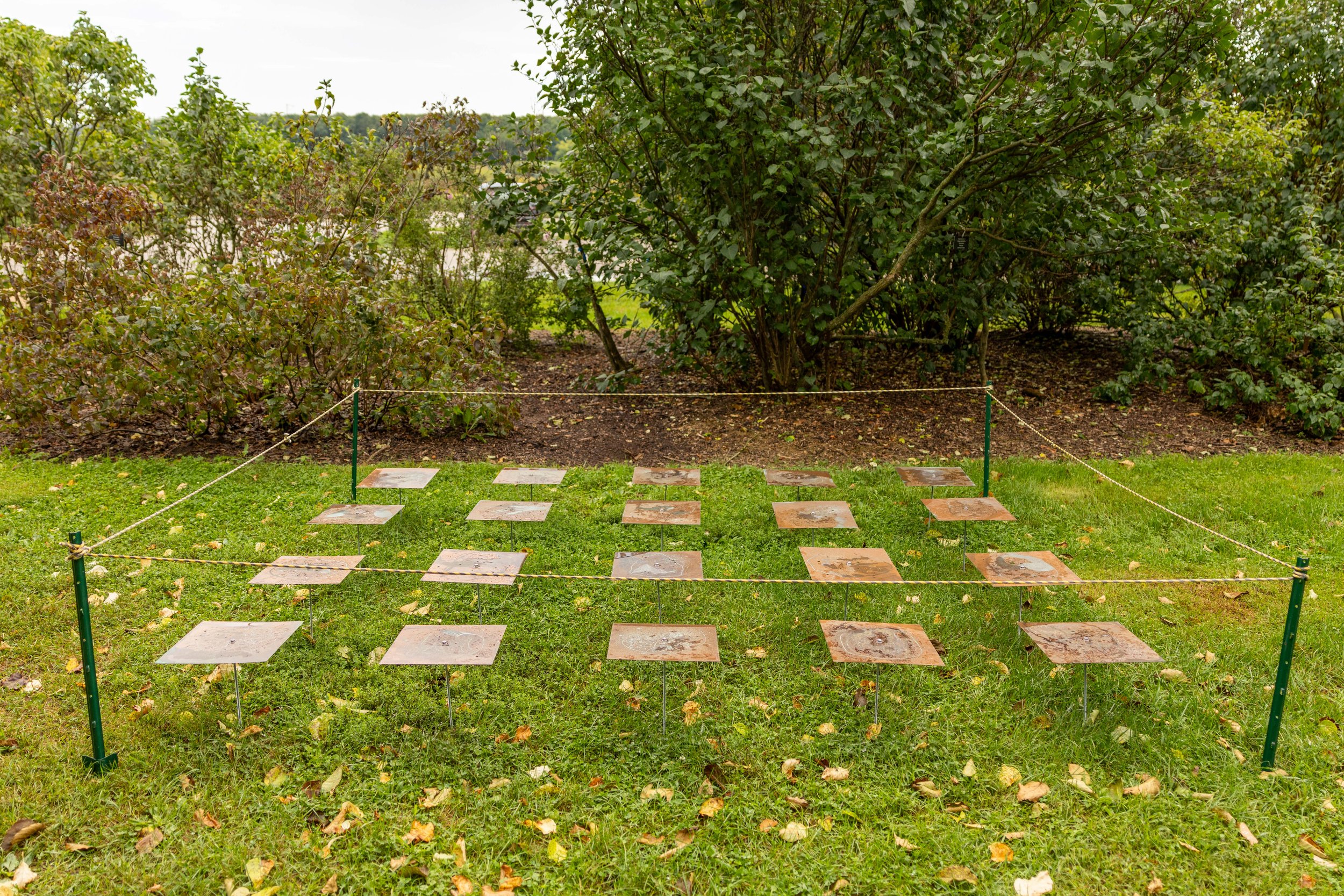
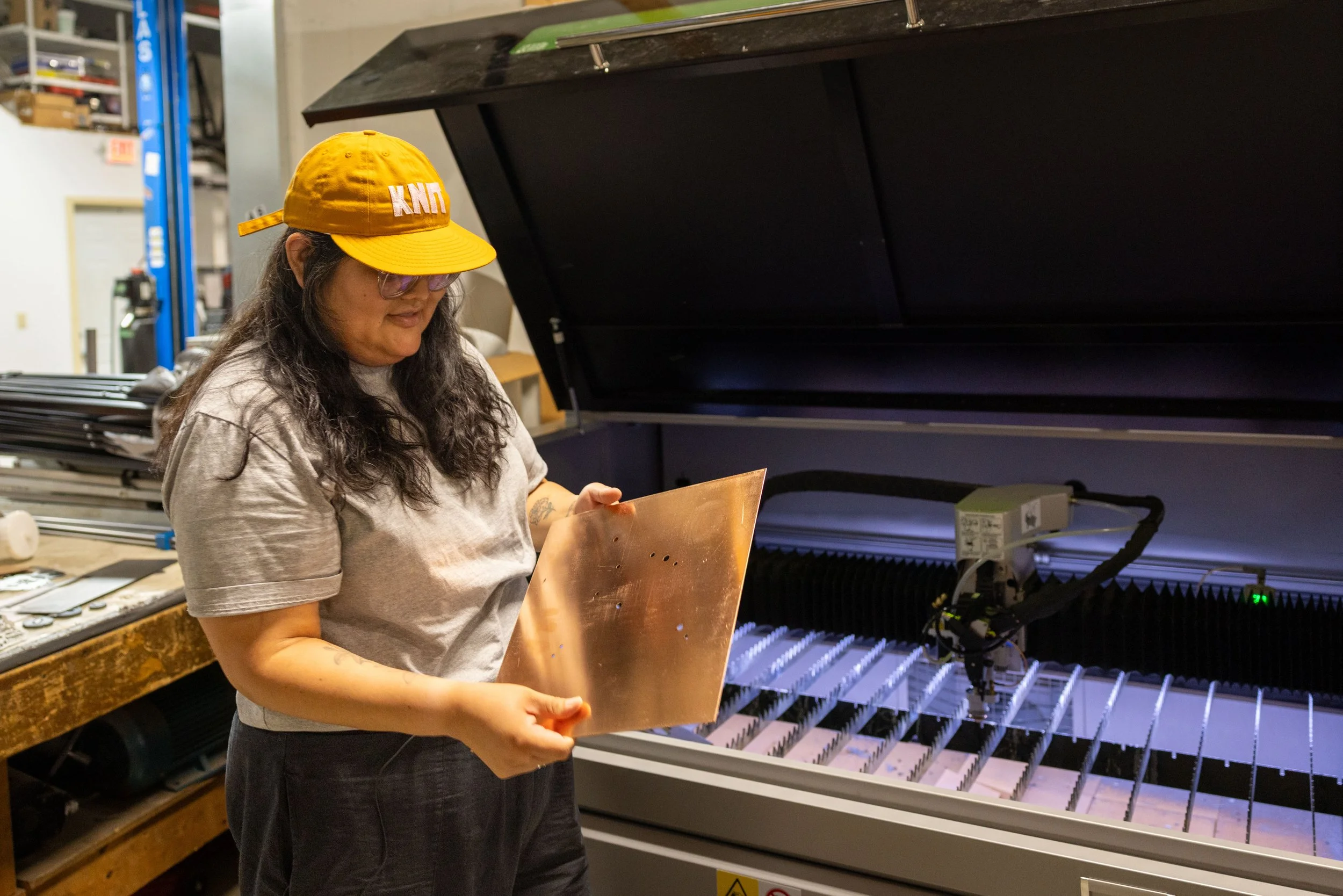
Dakota Mace’s artwork is created to possess multiple incarnations, one of which is an auditory piece activated by natural elements and its audience. It comprises a series of twenty copper plates, each measuring twelve inches by twelve inches. These plates illustrate narratives about stars, creation, and personal recollections, functioning as idiophones; each perforation emits a distinct ringing tone. The plates also depict the mapping of significant constellations from various nations, as well as stone stories collected from different lakes across the United States. Furthermore, the plates will incorporate drawings of these "seeing stones," which will fragment over time as the sound plates weather, reflecting the way Indigenous stories gradually become integrated into the land.
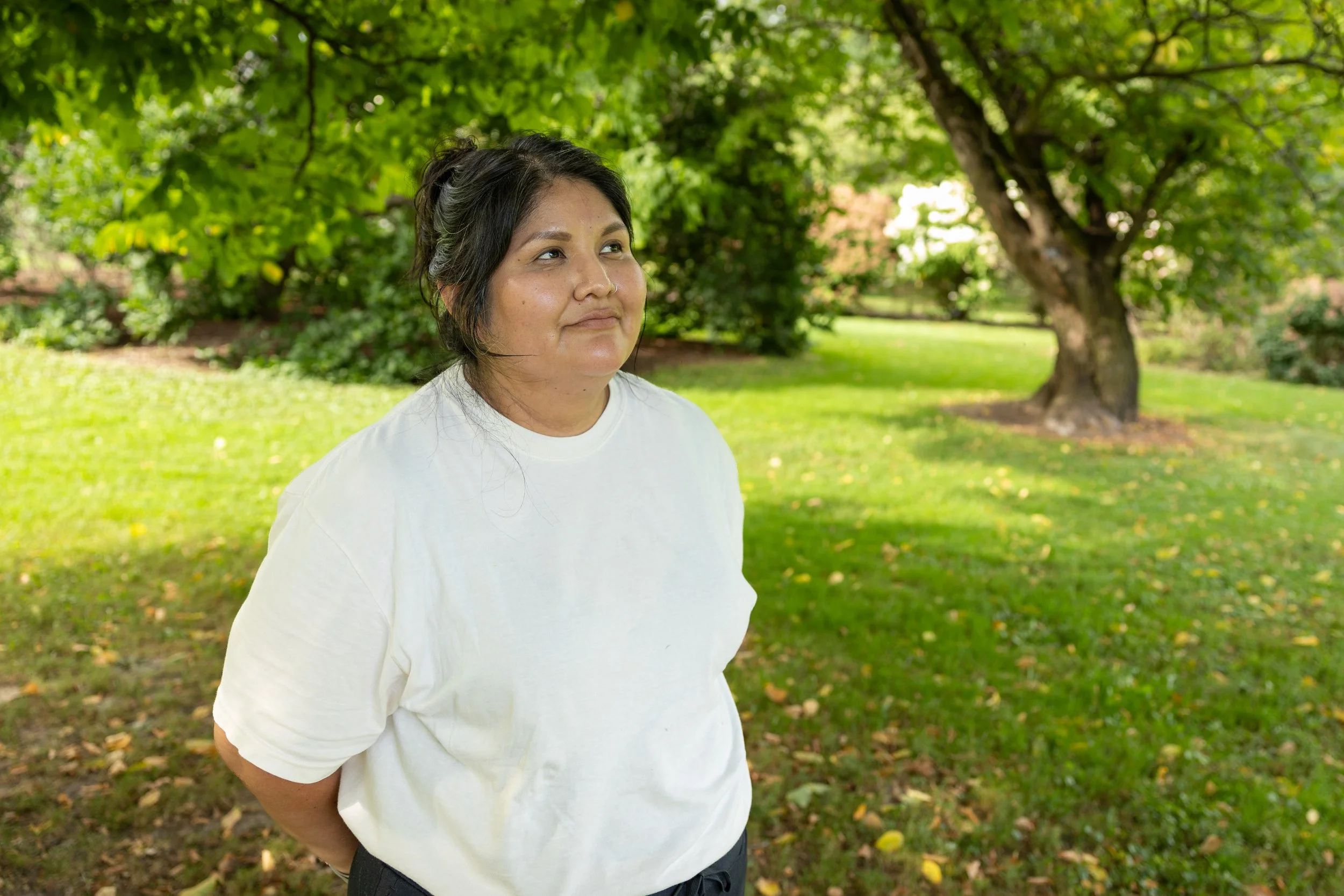
Dakota Mace (Diné) is an interdisciplinary artist who focuses on translating the language of Diné history and beliefs. Mace received her MA and MFA degrees in Photography and Textile Design at the University of Wisconsin-Madison and her BFA in Photography from the Institute of American Indian Arts. As a Diné (Navajo) artist, her work draws from the history of her Diné heritage, exploring the themes of family lineage, community, and identity.
UW-Madison Arboretum
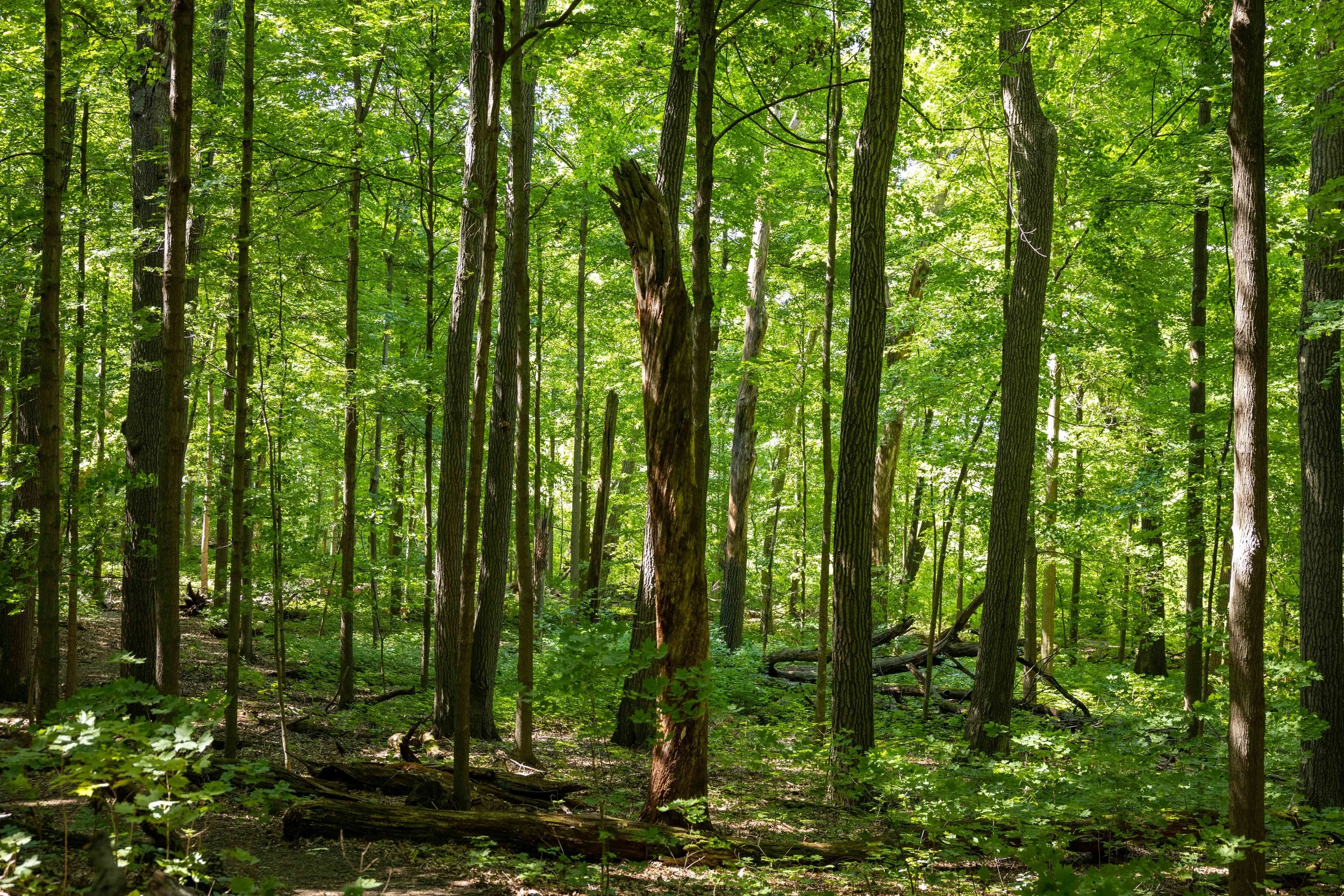
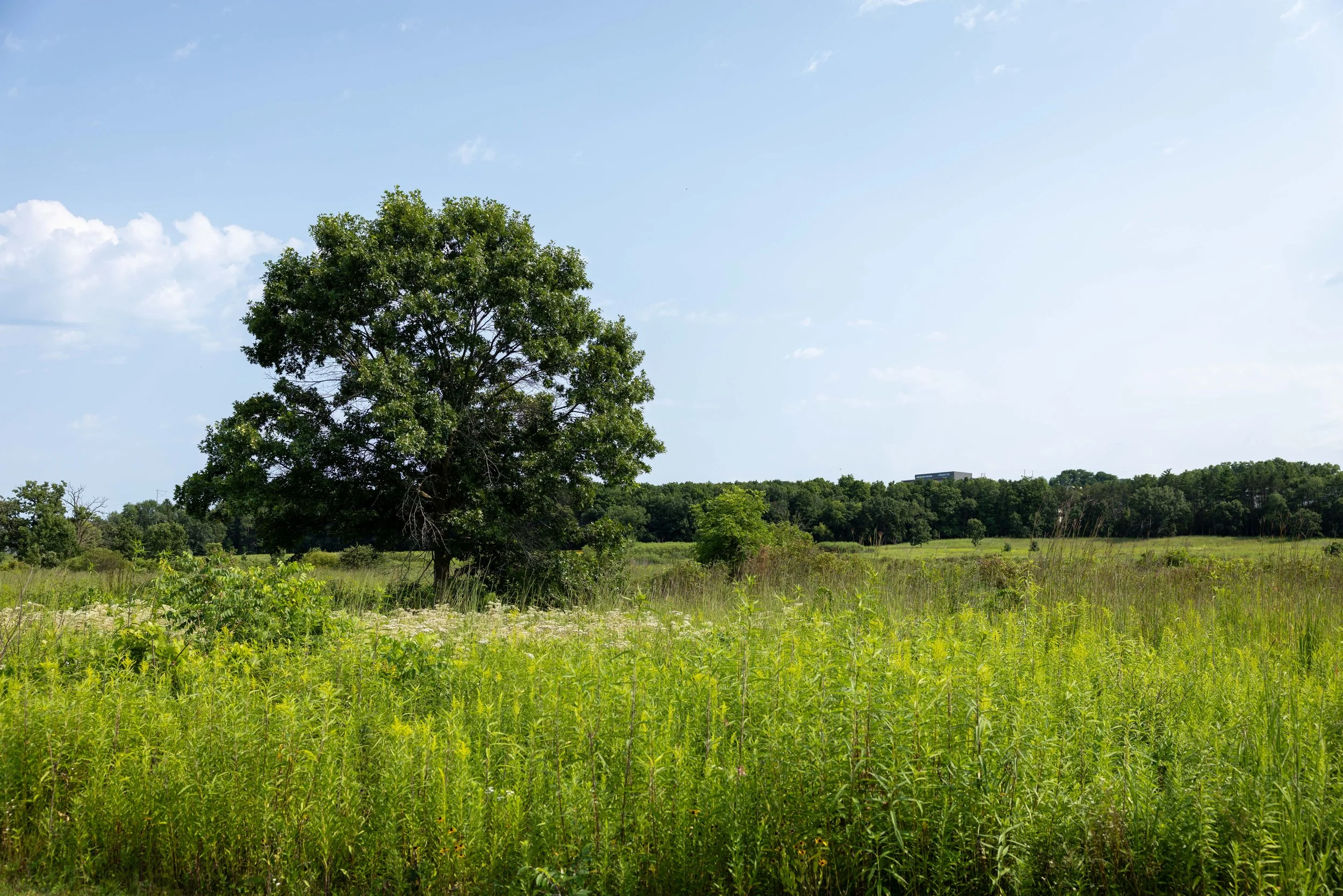
Teejop has always been a place of abundance. Prairies like this were once common. And oak trees––specifically, oak trees in openings that allowed their lower limbs to reach freely outward. You can still visit oak savanna in parts of the Arboretum. Along with oaks, many types of birds, like passenger pigeons. Canvasbacks and other ducks would fly from here overtop the nearby Dividing Ridge toward Lake Monona. In Lake Wingra: wild rice, wild celery, muskrats, and many fish. Ho-Chunk people have always loved and cared for Teejop. And, in turn, it has sustained Wąąkšikra.
Resources
Indigenuity & Teejop: Launching Mindfulness of this Sacred Place
Samantha SkenandoreDucks and Indians
Charles E. Brown Papers, Box 22 Folder 4, Wisconsin Historical SocietyDescription of the Four Lakes 1839
Charles E. Brown, Box 22, Folder 2, Wisconsin Historical Society
Burr Oaks Sketch, 1852
Adolf Hoeffler, Wisconsin Historical SocietyMadison from University Hill, 1852
Adolf Hoeffler, Wisconsin Historical Society
Reflection
What’s a place that’s sacred to you?
How do we treat places that are sacred?
When you feel energy, what does it feel like?
How do we learn to become better listeners to land?
How do we hear the song of this place?
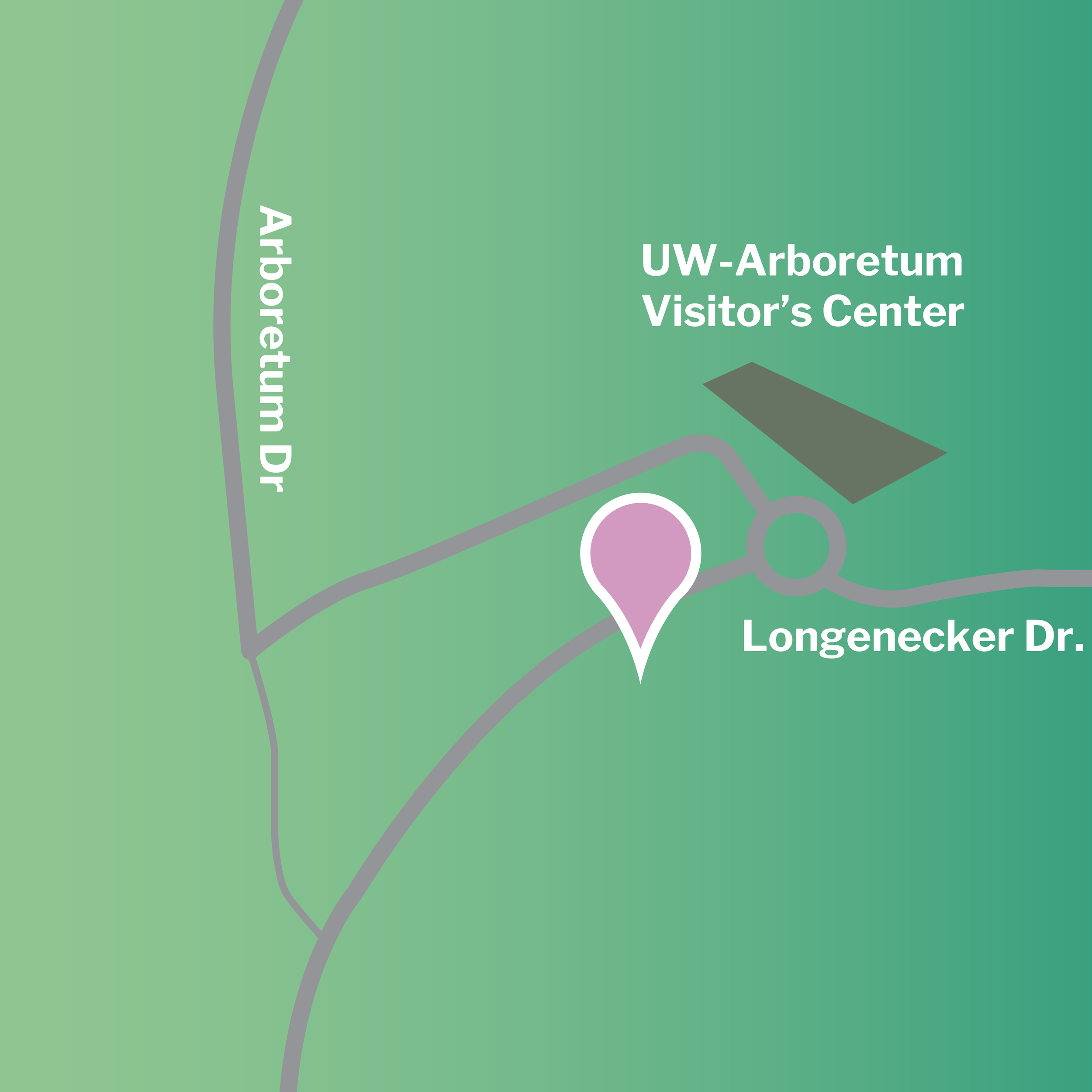
View map of the art installation location
Park on either side of visitor center parking lots. Installations are adjacent to parking areas.