

Artists
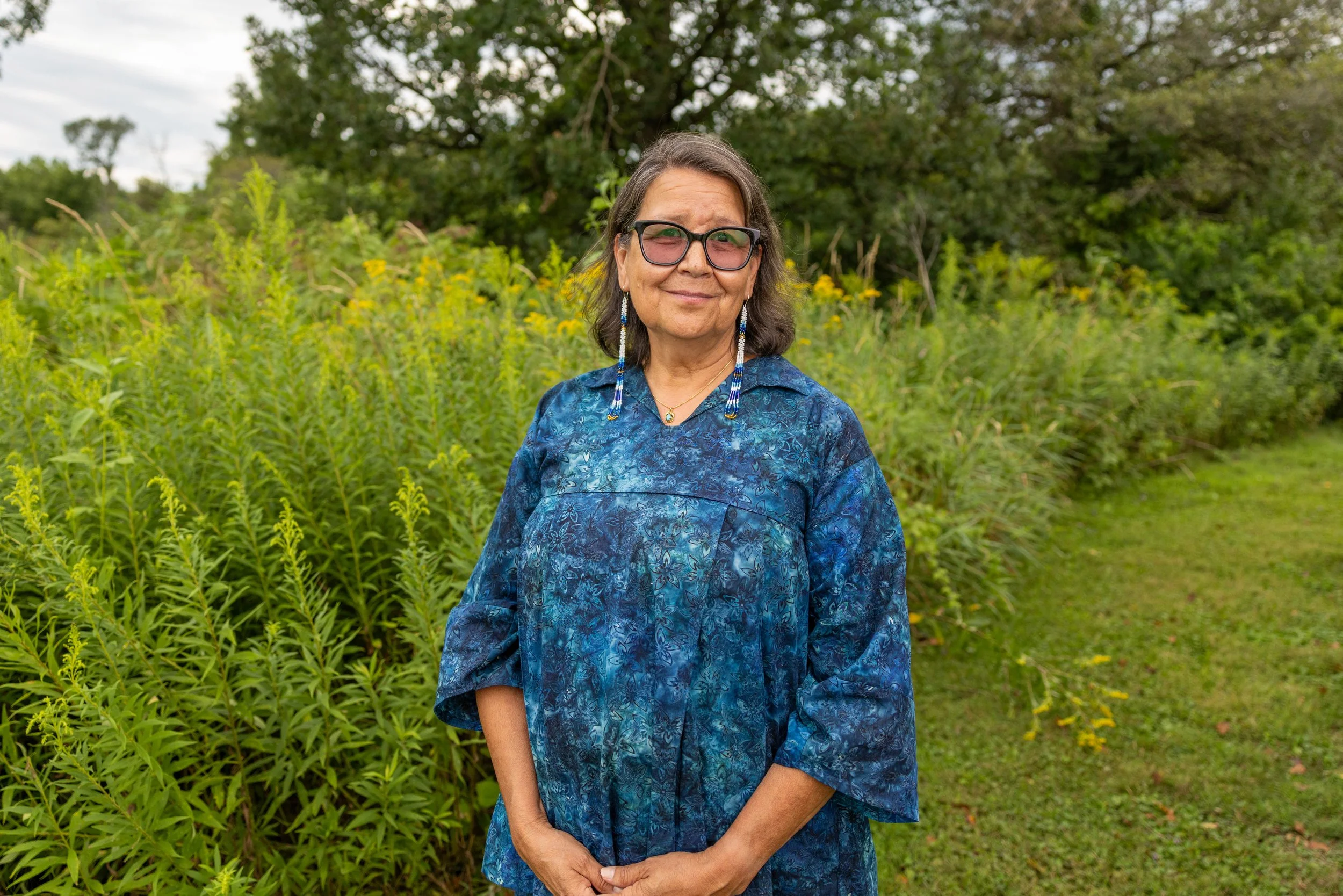
Melanie Tallmadge Sainz
(Hoocąk)
Site / UW-Arboretum
Installation / Hazac Mąą
I’m an enrolled member of the Ho-Chunk Nation of WI. My mother Bernadine Miner Tallmadge and my mother’s sister Dr. Helen Miner Miller were a part of the original tribal council that worked to get our tribe federal recognition in 1963. As a child of these fabulous women and role models I have done my best to represent my Ho-Chunk people at many gatherings and events throughout my lifetime. In 1977 I was selected as Miss Great Lakes to represent the various tribes of the western Great Lakes region. In 1980 I was chosen to be Miss Indian America XXVI, the first to hold the national title from a tribe east of the Mississippi. I share this with you as these opportunities gave me the chance to engage with many communities in our region, but most specifically my fellow Ho-Chunk communities. I launched Little Eagle Arts Foundation in 2013 as a way to support the artistic growth of my fellow Ho-Chunk people, as well as the many Native creatives that call WI home. To date we have over 60 Native artists on our roster from rural and urban communities. Aside from LEAF, over the past 10 years I have personally provided free quill and bead art workshops and children’s workshops at a variety of events at Ho-Chunk area offices and wellness gatherings.
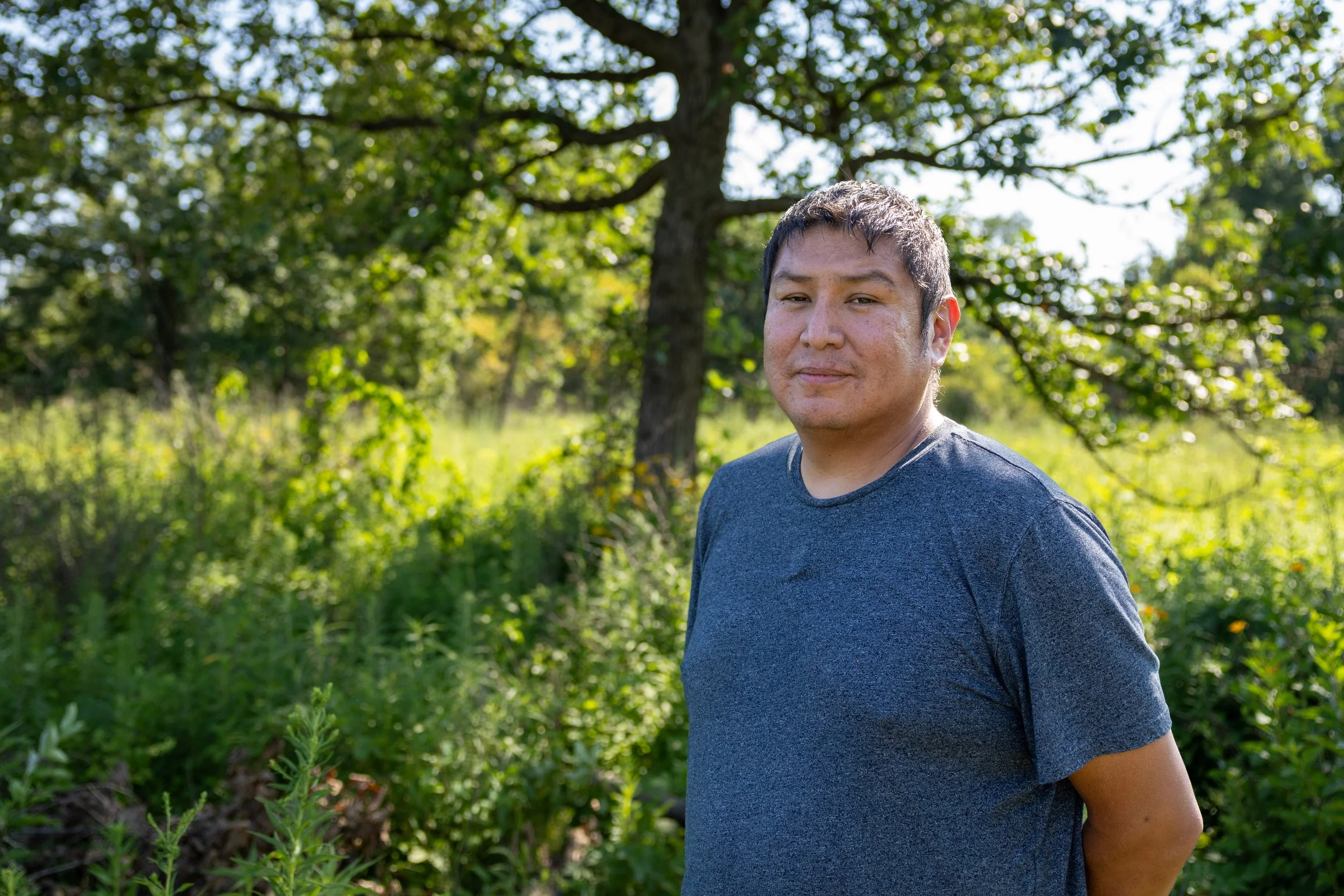
Lightning the Earth New Rider (Hoocąk / Oneida)
Site / UW-Arboretum
Installation / Hazac Mąą
Lightning New Rider is a Ho-Chunk Nation Bear Clan member motivated to care for his community through Ho-Chunk traditional foods. Lightning is the Garden Coordinator for Wild Bearies in Wisconsin Dells and the Little Eagle Art Foundation L.E.A.F. consultant at Mąą Wakącąk. Lightning attended college at Western Technical College in La Crosse, Wisconsin, where he obtained a degree in Horticulture with greenhouse management, germinating and propagating healthy plants and shrubs, and exterior landscaping. While enjoying designing landscapes, Lightning’s interest grew to include Ho-Chunk lifeways in caring for the earth with traditional garden management. In learning from his family and community, Lightning is sought after for his garden management and expertise in growing Ho-Chunk foods.
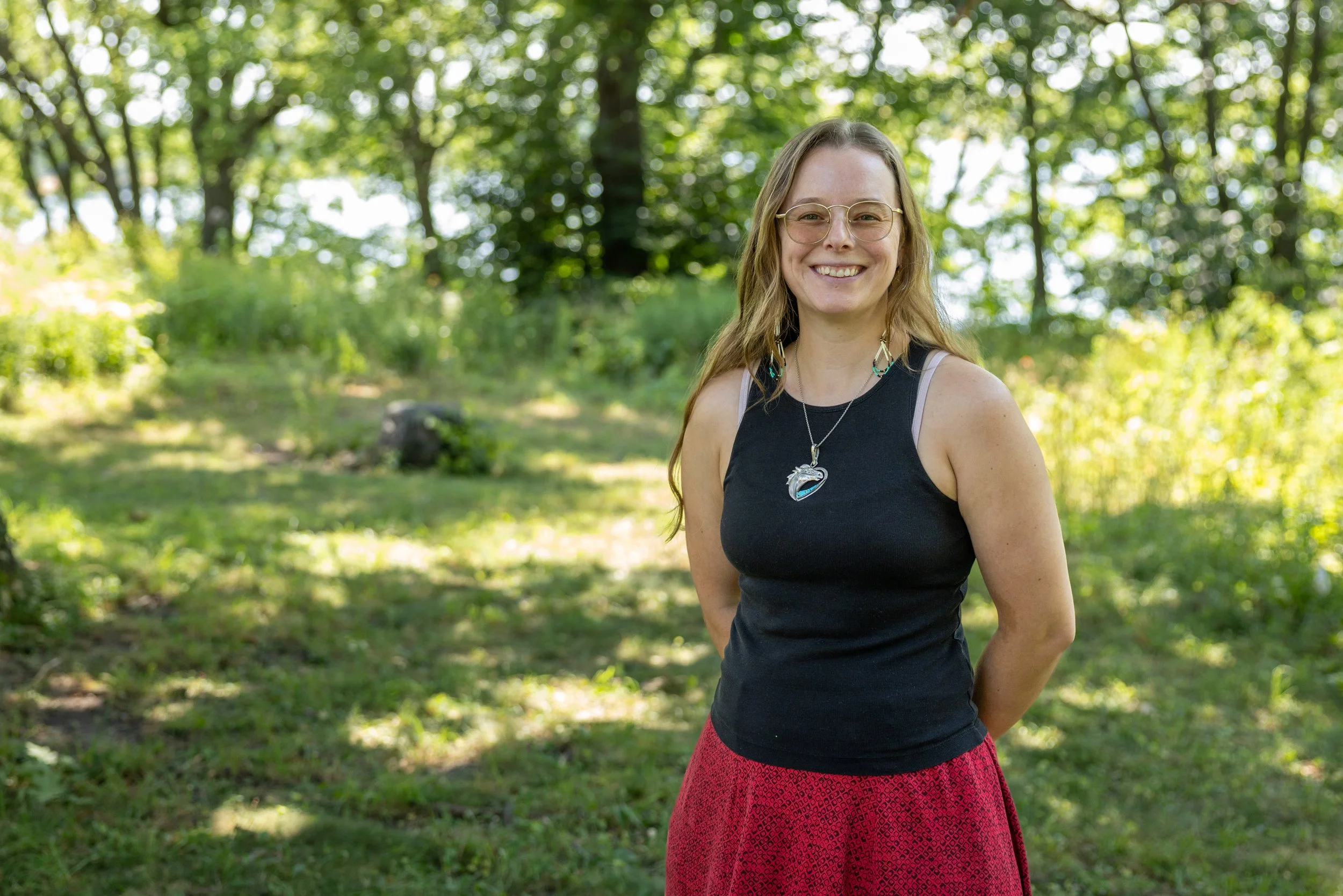
June Whitehorse
(Hoocąk)
Site / Olbrich & Hudson Parks
Installation / Greeting the Land
My name is June Little Soldier Whitehorse. I am a self-taught, multidisciplinary artist and proud member of the Ho-Chunk Nation. For the past ten years, I have been living and working in Huichin (Oakland, California), where I am pursuing my passions for art and activism.
My artistic journey is deeply rooted in my upbringing. Growing up, I was surrounded by Native art and inspired by my late father, Harry, who was an extraordinary artist and craftsperson. My work spans printmaking, graphic design, bookbinding, and beadwork, blending traditional techniques with contemporary themes. Through printmaking, I have contributed to movements for affordable and safe housing, while my beadwork combines traditional adornment with modern fashion to celebrate Indigenous resilience and presence in urban settings. As my father was skilled in a number of trades, I have felt called to hone many different skills in addition to my artistic practice, such as carpentry and auto mechanics.
My goal as an artist is to honor my father, honor Indigenous histories of survival, and expand my practice of traditional craftwork, with a contemporary eye.
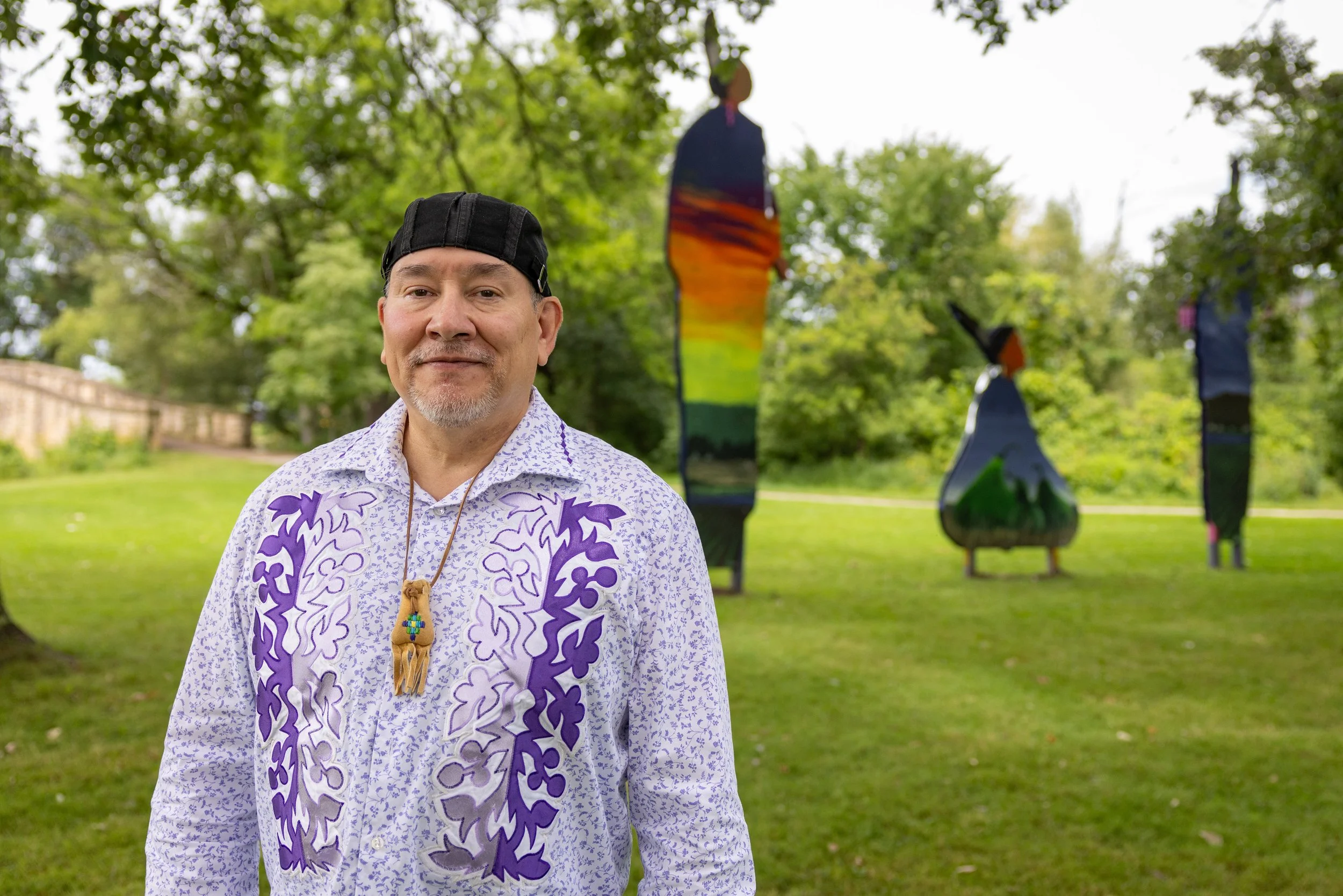
Christopher Sweet
(Hoocąk / White Earth Ojibwe)
Site / Tenney Park
Installation / Sisters Interwoven
Christopher Sweet is a contemporary Native American multi-disciplinary artist whose creative journey is deeply shaped by his heritage as an enrolled member of the Ho-Chunk Nation of Wisconsin and as a descendant of the White Earth Band of Ojibwe of Minnesota. Growing up in Wisconsin and now living in the Wisconsin Dells area, Sweet’s art is profoundly influenced by the distinct languages, locations, and traditions of these two tribal nations.Sweet showed artistic talent from an early age and briefly attended the Institute of American Indian Arts in Santa Fe, New Mexico, after high school. However, it was not until 2016, following a chance opportunity to showcase his work in a solo exhibition, that he was inspired to pursue art as a dedicated career. Since then, Sweet has exhibited widely, sharing his pieces in both solo and group shows, participating in juried art events, and creating works for public spaces and private collections. In 2021, he established Blue Bear Studio, his creative space and gallery, named after the English translation of his Hoocąk name, Huuc Coo.
Sweet’s creative process is rooted in intentions of unity and healing, which he weaves into every piece. For him, art is both a personal healing journey through adversity and a hope-filled offering to others—a way to bring people together through a universal visual dialogue. As an introvert, Sweet uses art as an authentic expression of his emotions, values, and thoughts. His work frequently features themes of reflection and introspection, illustrated through waterscapes, sunglasses, and his signature applique motif—a mirrored pattern symbolizing the complexity of life through layers and textures. Sweet’s art bridges traditional and modern Native experiences, drawing on cultural ways of life, regalia, dance, family, storytelling, and spiritual interconnectedness for inspiration. His contributions resonate with sincerity, depth, and a profound sense of cultural pride.
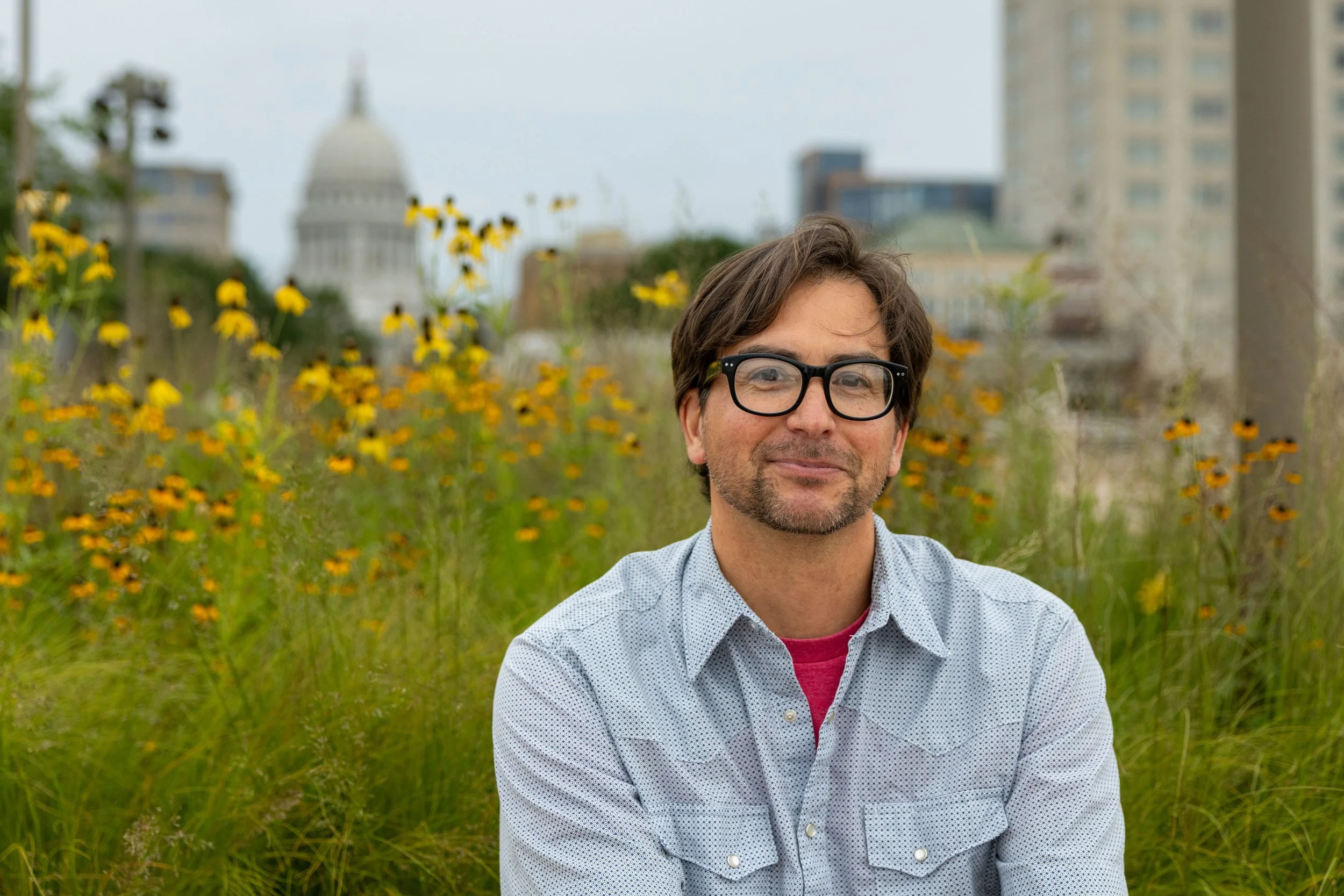
Chloris Lowe
(Hoocąk)
Site / Capitol Hill
Installation / We Still Dance (Hegųregi Paašiwi)
Chloris Lowe is a multidisciplinary artist who resides in West Central Wisconsin. He is an enrolled tribal member of the Ho-Chunk Nation who has spent much time in the Teejop region; initially for the completion of his undergraduate degree BFA’04, and more recently as the current Hoocąk (Ho-Chunk) Language instructor in AIIS for UW Madison.
Over the last decade Chloris’s art practice has transitioned into public facing sculptural works that often concern themselves with the history of the landscape, the layering and creation of place, and the people who have moved and continue to move throughout those spaces.
Chloris’s practice explores the relationships between people, objects, and place. Working across various media, Lowe creates sculptural forms that merge utility and meaning while drawing from cultural knowledge and design traditions. His public installations demonstrate an ability to translate traditional forms and design language into contemporary civic spaces. Lowe brings a deep commitment to ensuring that work situated on ancestral Ho-Chunk land reflects a connected, authentic, and respectful living relationship to people and place.
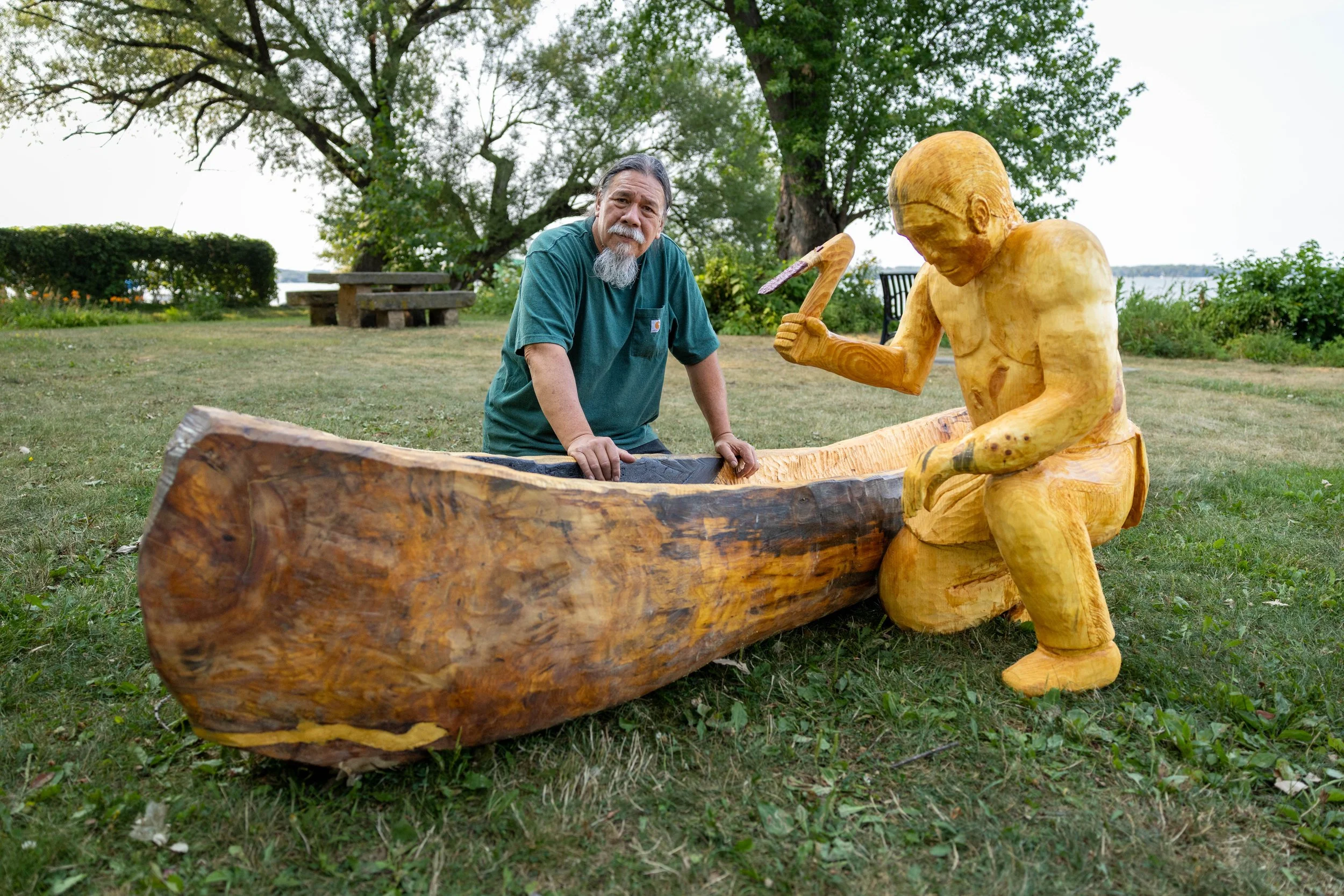
Gene Delcourt
(Abenaki, French, and Filipino)
Site / Merrill Springs
Installation / Dugout at Merrill Spring
Gene is an educator and artist who was mentored by Ho-Chunk artist Harry Whitehorse and founded an international wood sculpture festival in his honor. Gene’s works include local and international award-winning pieces, and private and public commissions including a piece for the Lac du Flambeau Ojibwe casino.
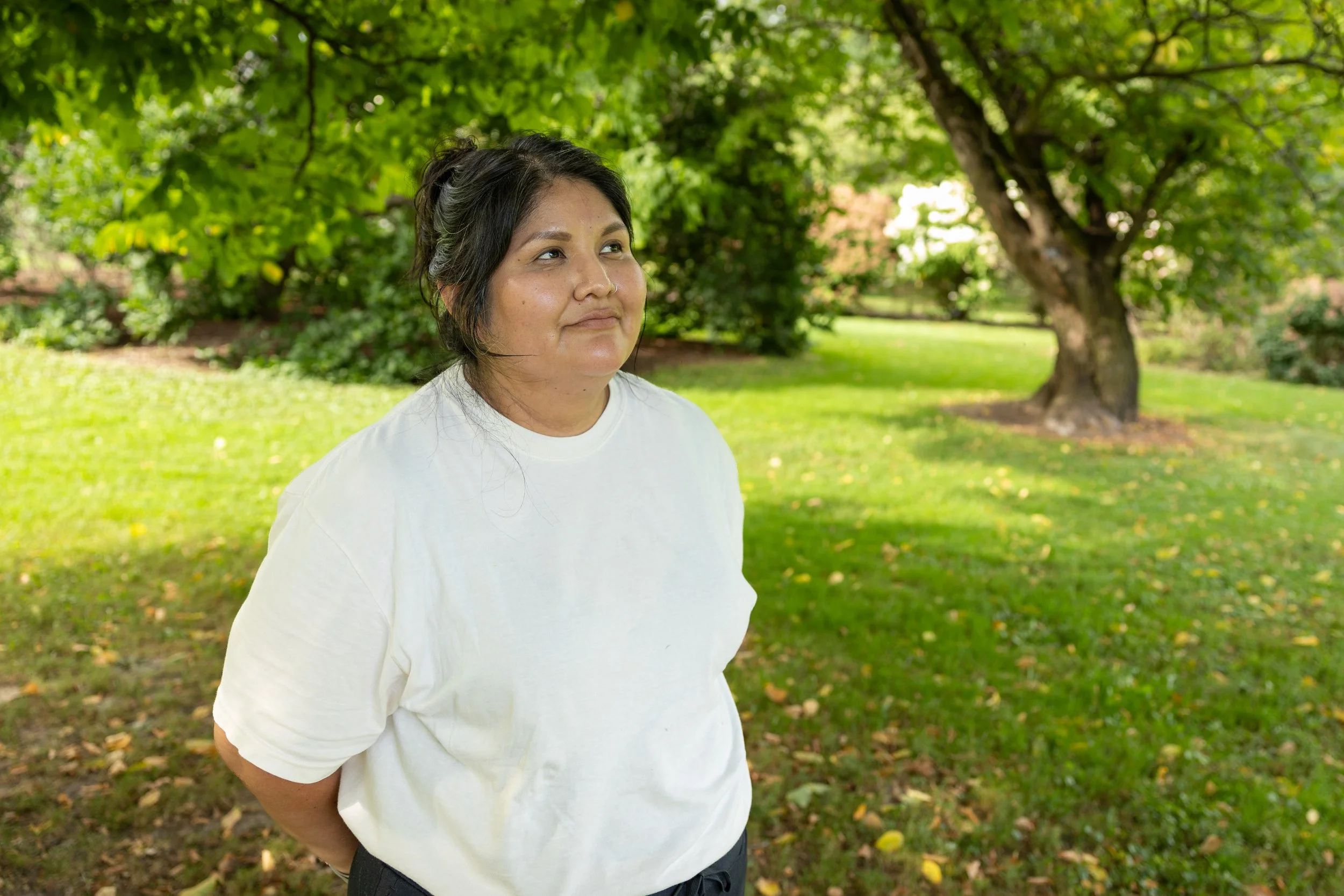
Dakota Mace
(Diné)
Site / UW Madison Arboretum
Installation / Tsé' Bahane'
Dakota Mace (Diné) is an interdisciplinary artist who focuses on translating the language of Diné history and beliefs. Mace received her MA and MFA degrees in Photography and Textile Design at the University of Wisconsin-Madison and her BFA in Photography from the Institute of American Indian Arts. As a Diné (Navajo) artist, her work draws from the history of her Diné heritage, exploring the themes of family lineage, community, and identity. In addition, her work pushes the viewer's understanding of Diné culture through alternative photography techniques, weaving, beadwork, and papermaking.
She has also worked with numerous institutions and programs to develop dialogue on cultural appropriation and the importance of Indigenous design work. She is the photographer for the Helen Louise Allen Textile Center and the Center of Design and Material Culture.
Her work is in the collections of the Library of Congress, Forge Project Collection, Whitney Museum of American Art, Everson Museum of Art, Amon Carter Museum, National Gallery of Art, Museum of Contemporary Photography among other public collections.