
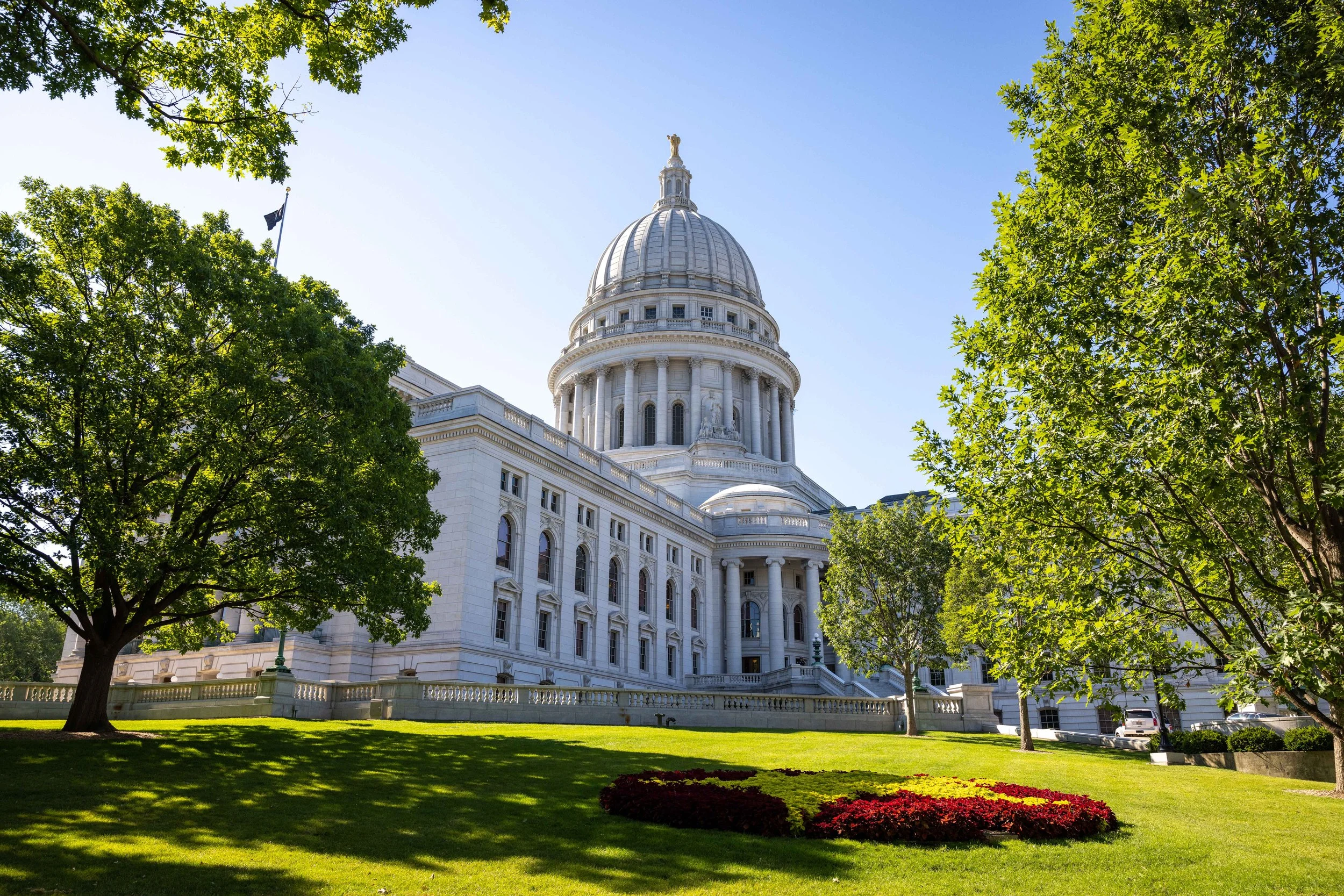

CAPITOL
HILL


Our ancestors defied repeated removals and endured unimaginable hardships to ensure that we are still living in our homeland.

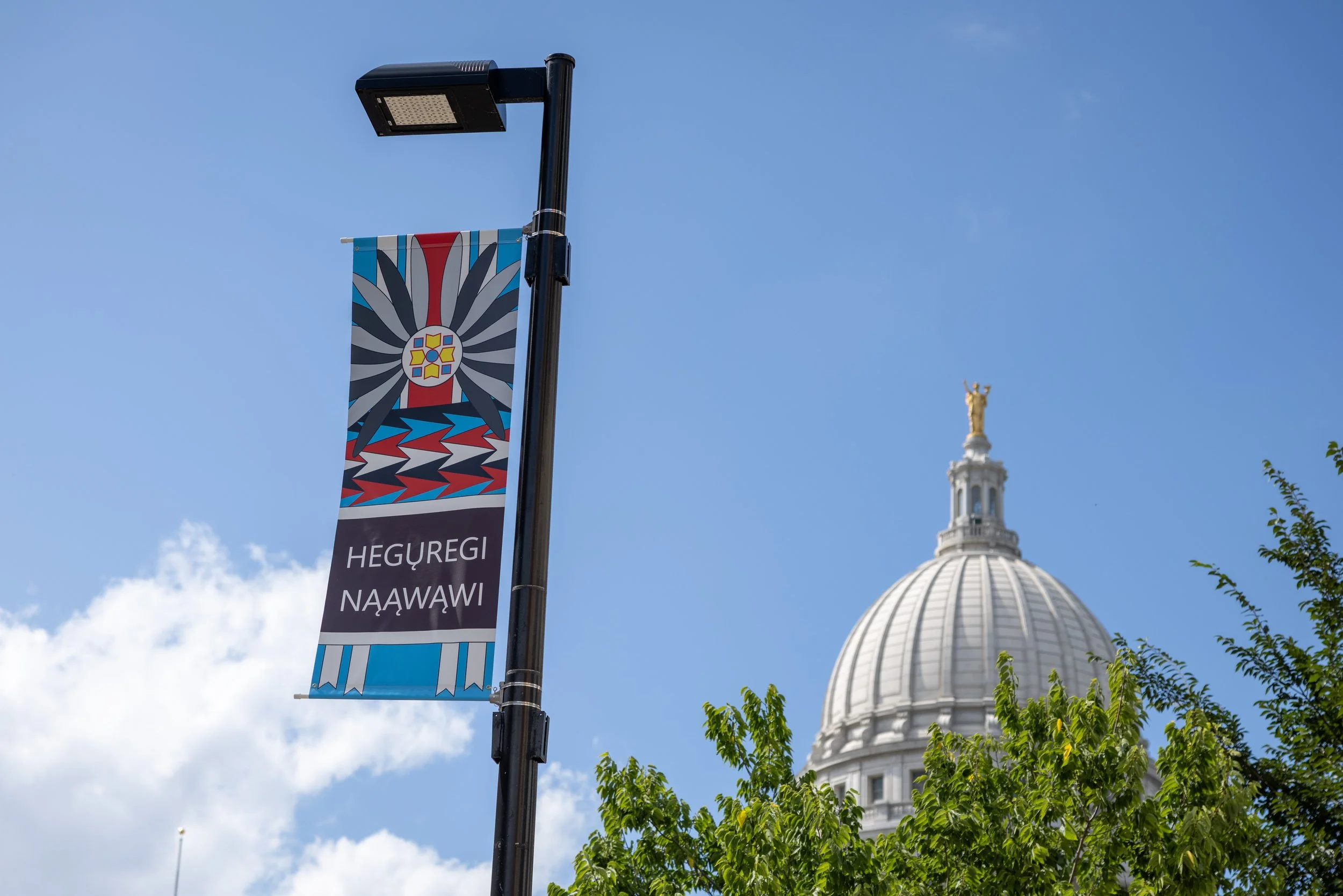
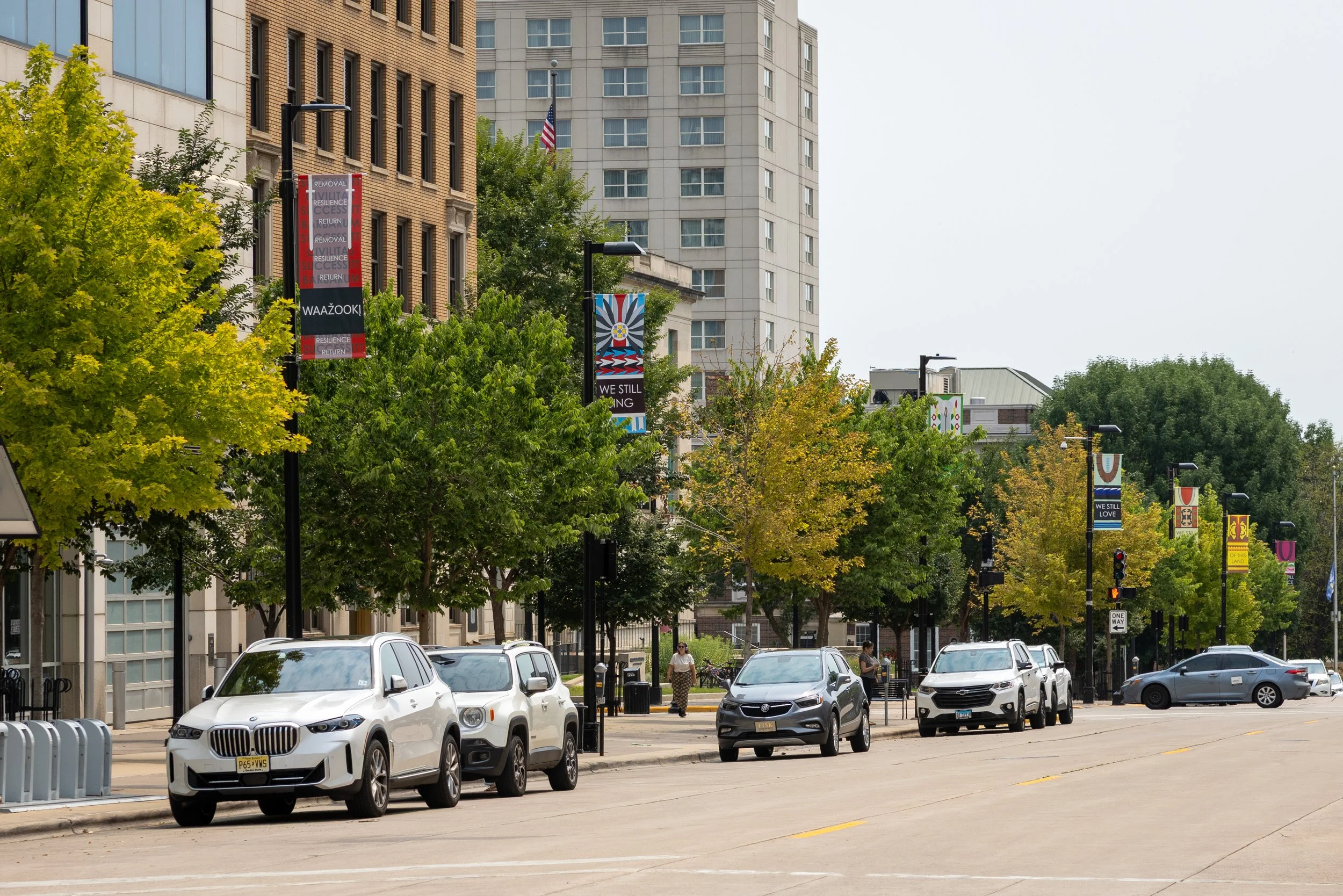
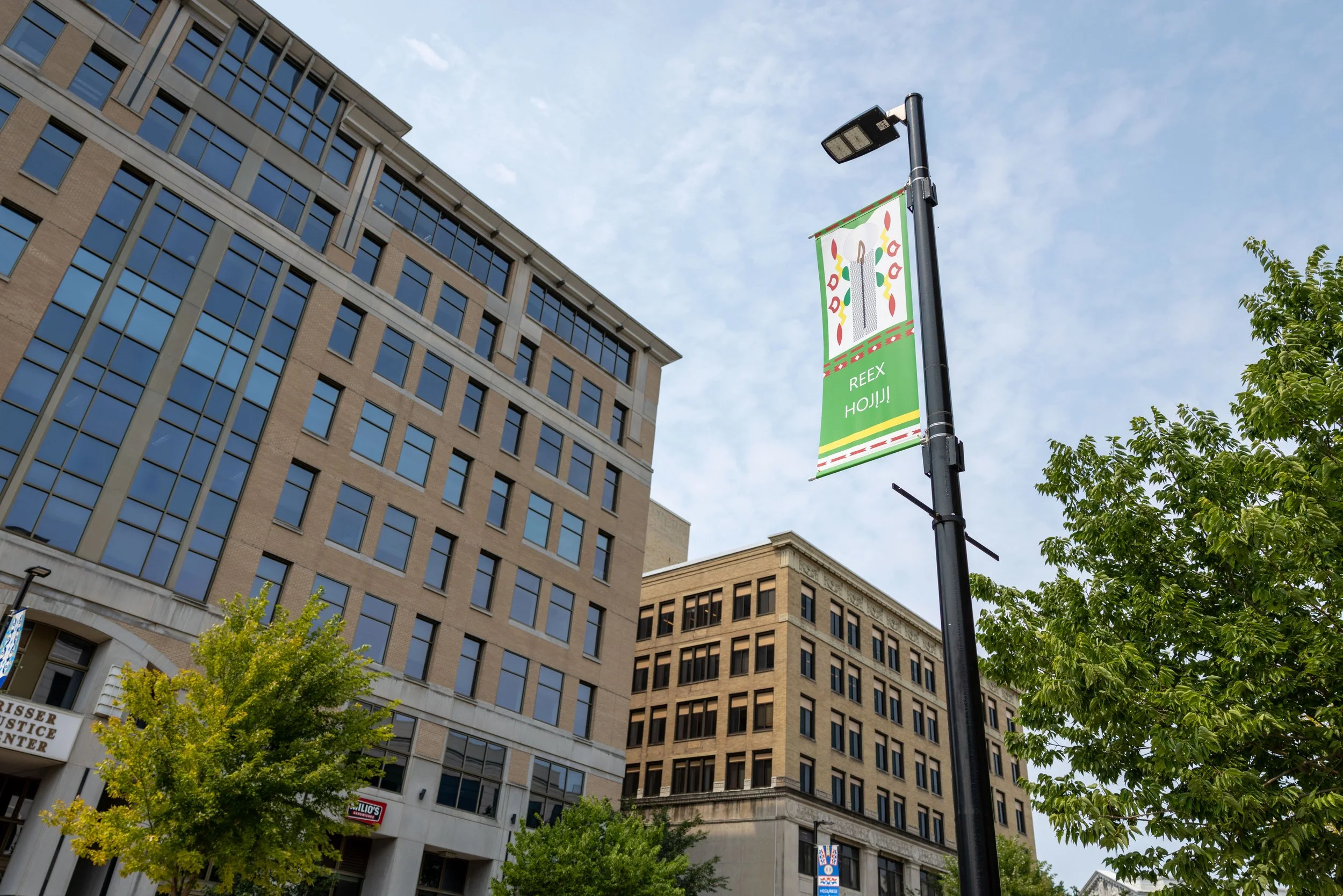
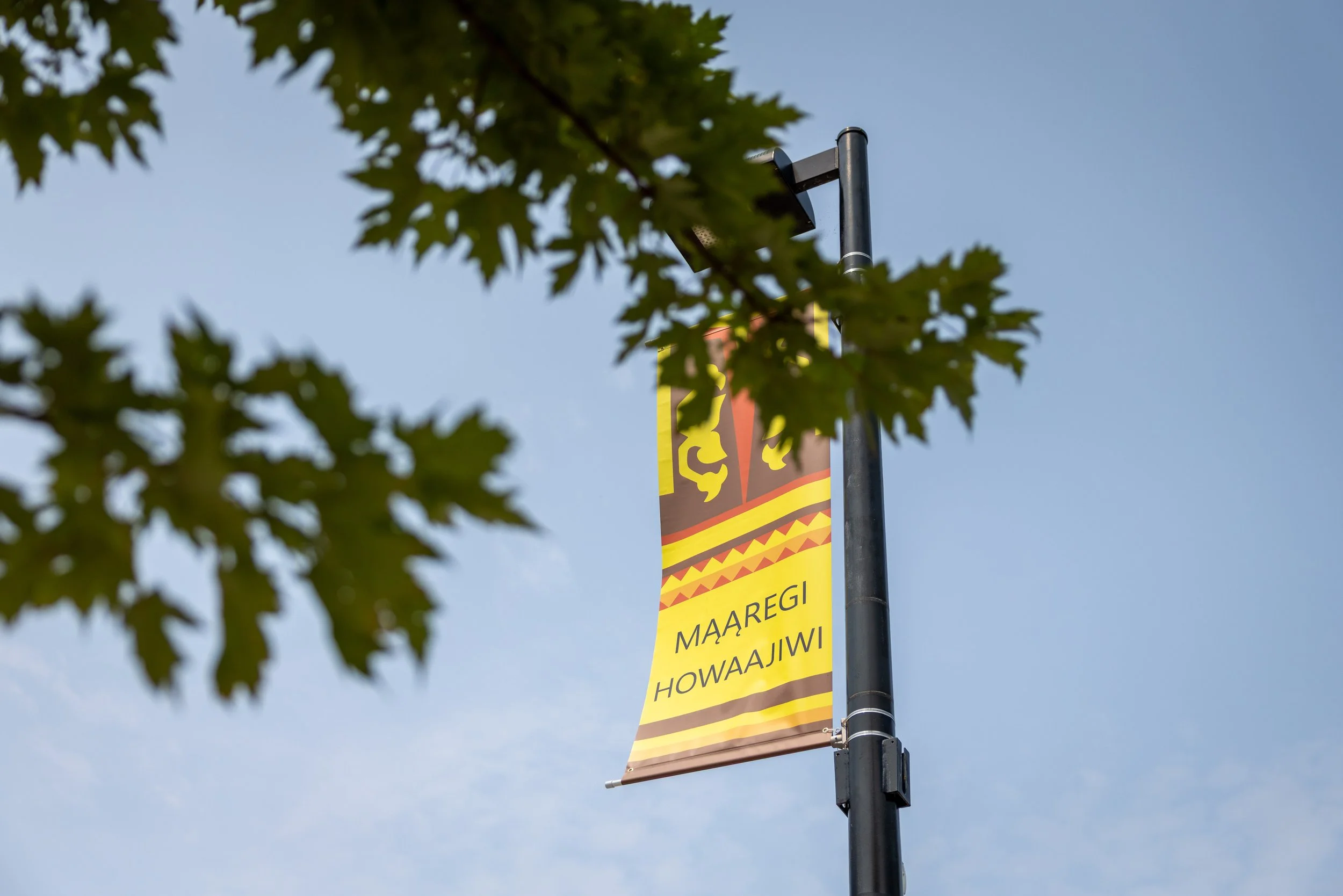
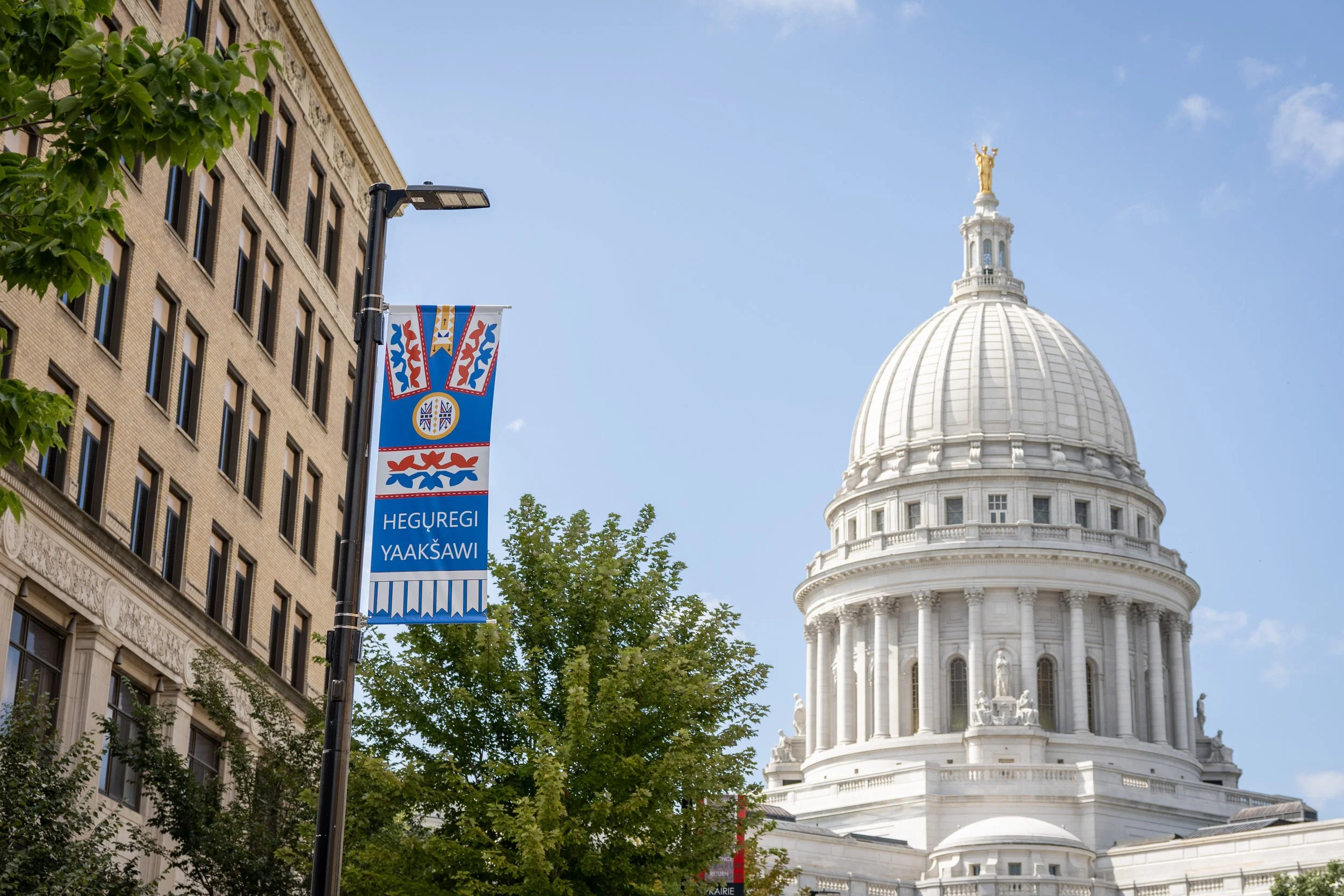
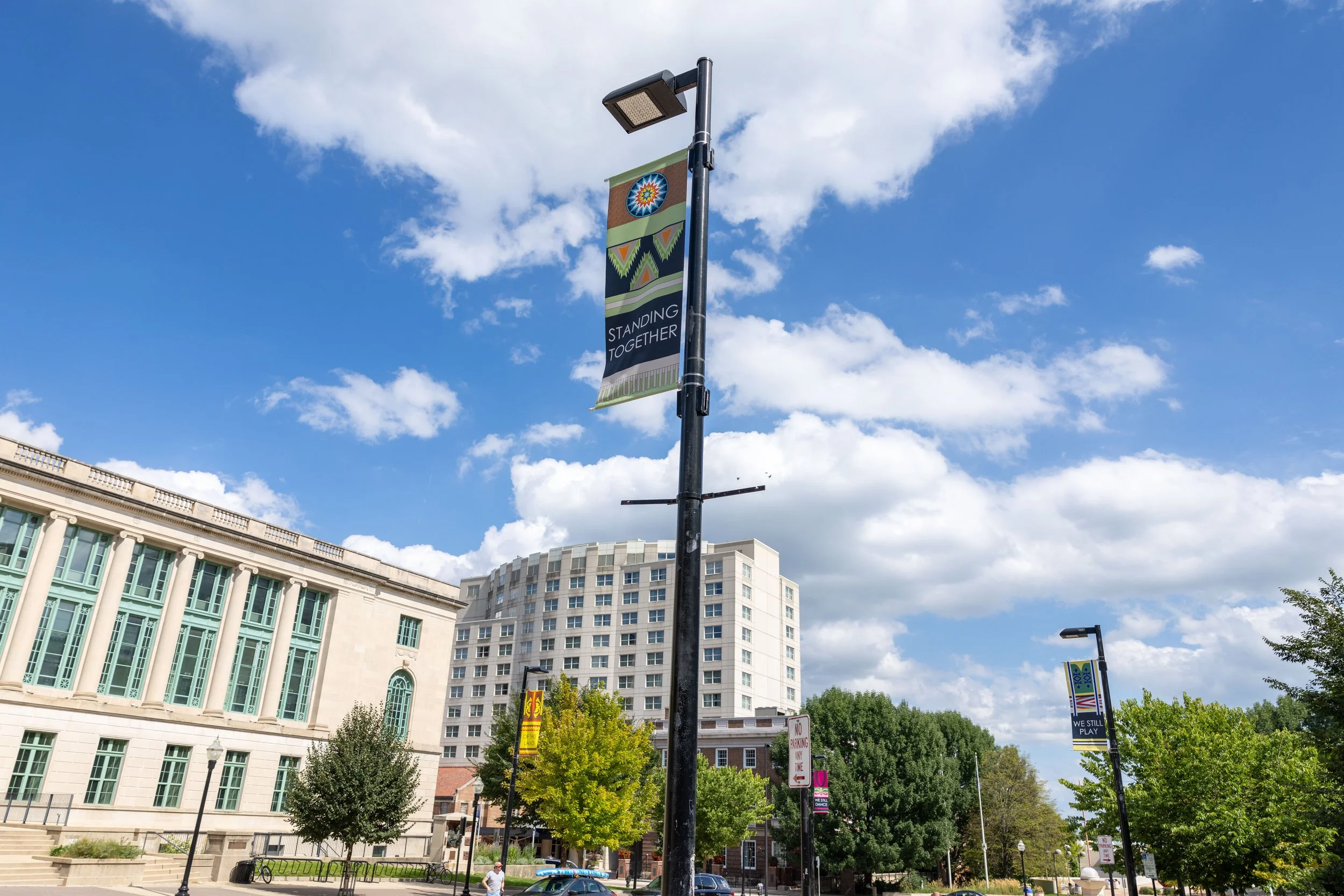
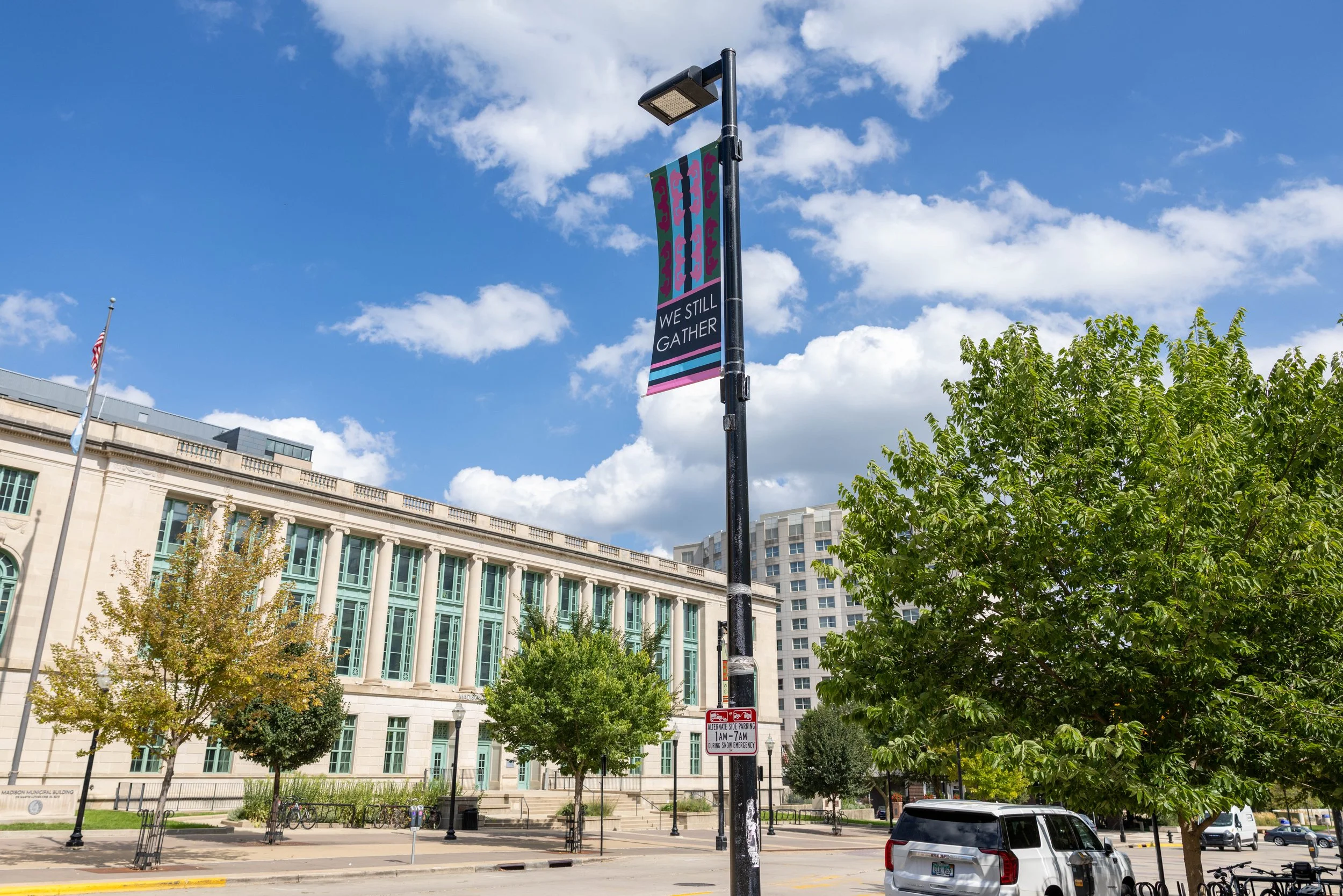
We Still Dance (Hegųregi Paašiwi)
Chloris Lowe (Hoocąk)
The intention behind We Still Dance (Hegųregi Paašiwi) was to create a colorful and positive procession showing resilience and community directly addressing a government that has time and again constructed policy in order to displace and disenfranchise indigenous peoples.
Referencing contemporary powwow regalia, the colors and designs placed on the banners create a canvas for the Hoocąk language, which contain statements of resilience and a timeless commitment to community and family that proudly survives and thrives within the people and families of the Ho-Chunk Nation.
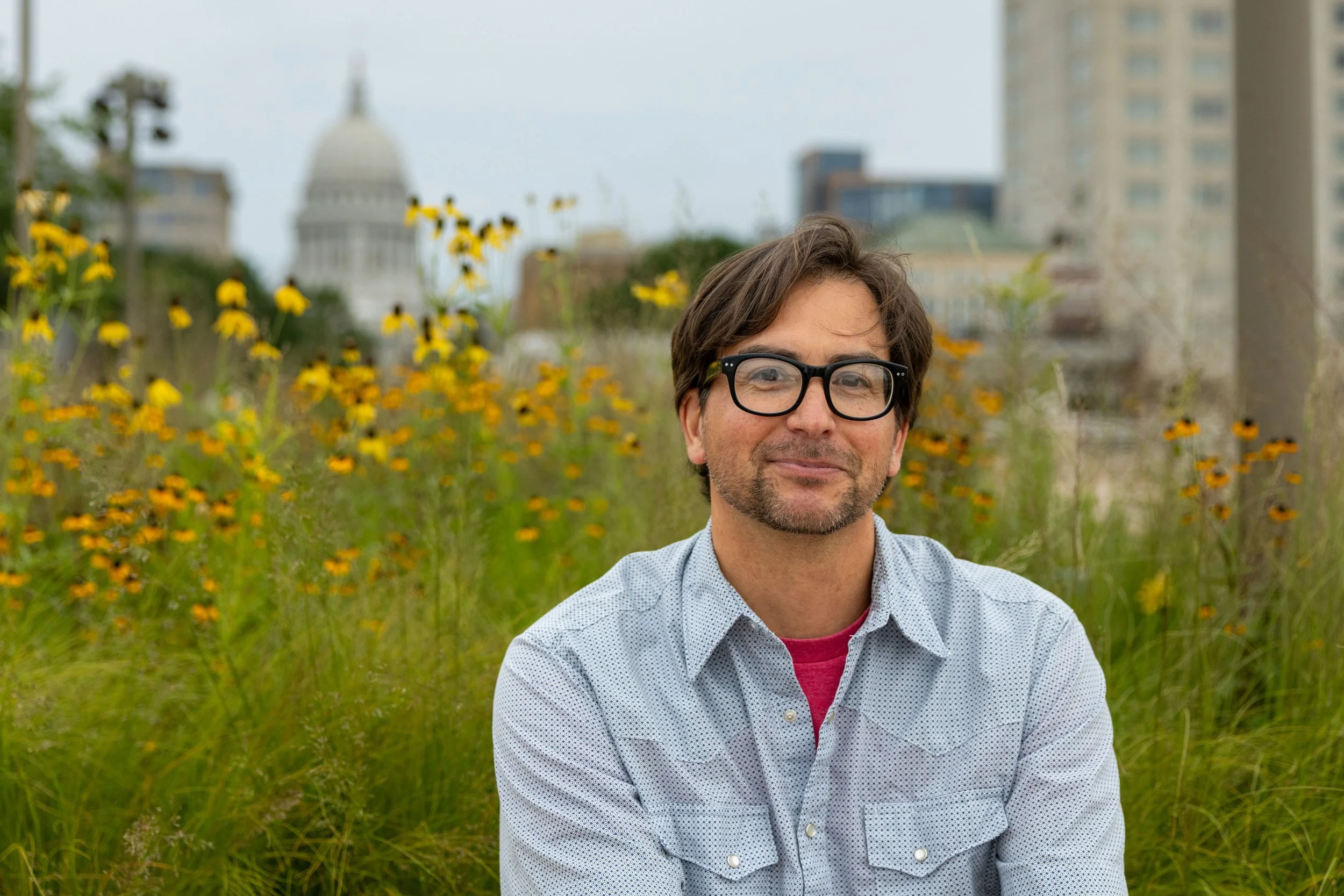
Chloris Lowe is a multidisciplinary artist who resides in West Central Wisconsin. He is an enrolled tribal member of the Ho-Chunk Nation who has spent much time in the Teejop region; initially for the completion of his undergraduate degree BFA’04, and more recently as the current Hoocąk (Ho-Chunk) Language instructor in AIIS for UW Madison.
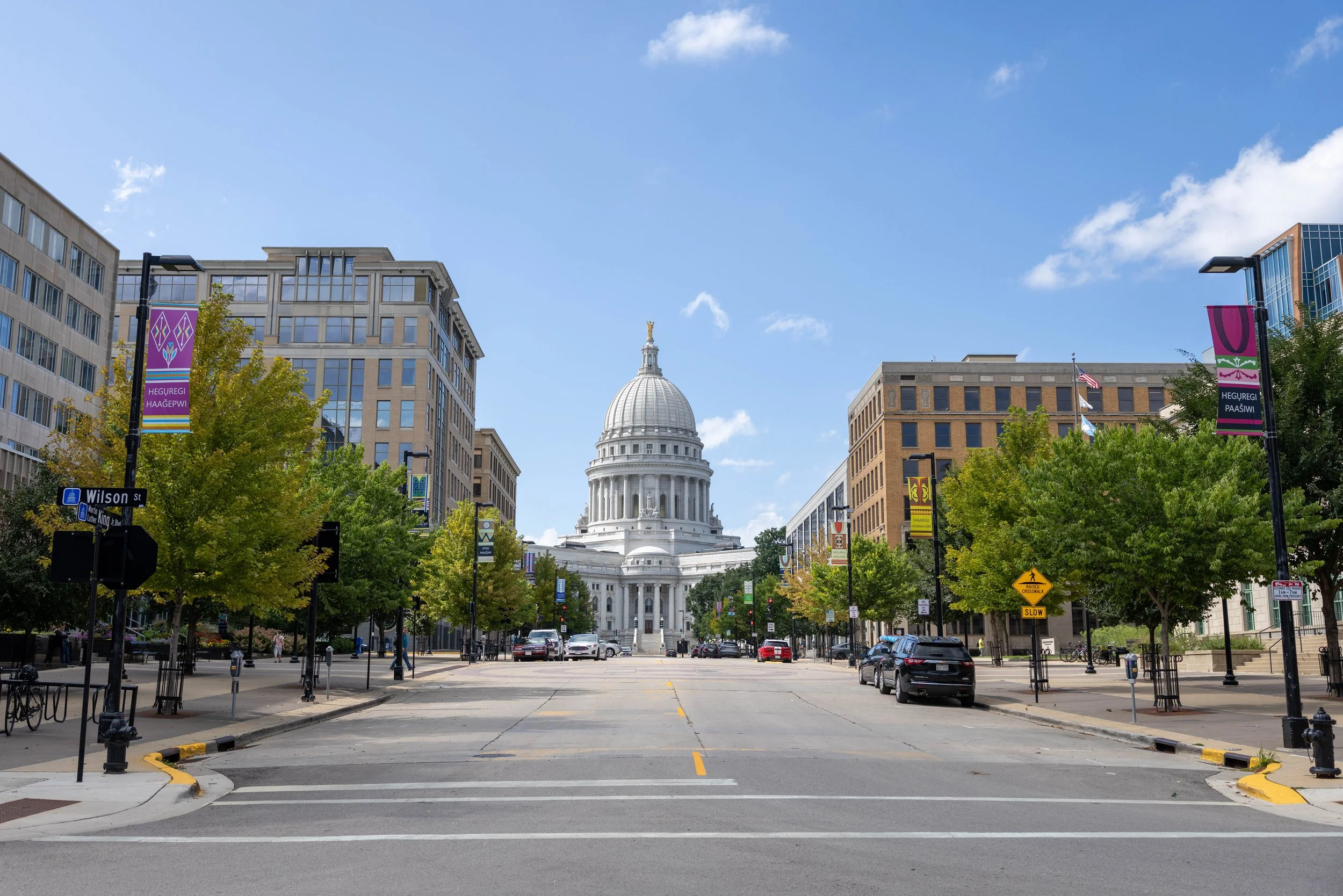
Capitol Hill
Despite settler governments attempts in the 1800s, Hoocąkra either never left Teejop or kept coming back. Ho-Chunk people were at the cornerstone laying for the first territorial capitol in 1837. Ho-Chunk leaders negotiated with Wisconsin governors repeatedly here in the 1830s, 40s, 50s, and 60s so their people could stay in their homelands. After one meeting in the 1860s, a local photographer on Capitol Square took studio portraits of Wakąjaziga (Yellow Thunder), Wakąjaxeriga (Roaring Thunder), and other leaders.
Where is your homeland?
What would you endure for your homeland?
Are removals happening now?
How do we keep this from happening again?
How do we become good ancestors here?
Reflection
Ho-Chunk Group Portrait
Wisconsin Historical SocietyDandy, Second Chief and Orator
Wisconsin Historical SocietyThe 1840 Winnebago Removal
by E.W. Keyes - From The Milwaukee Sentinel - October 7, 1895
Resources
Ho-Chunk Removal Map
Zoltan GrossmanCitizens of a Stolen Land: A Conversation of Ho-Chunk History & Survivance
Stephen Kantrowitz and Josie LeeSave The Mounds Rally #2 Joanne Jones
Indian Country TV
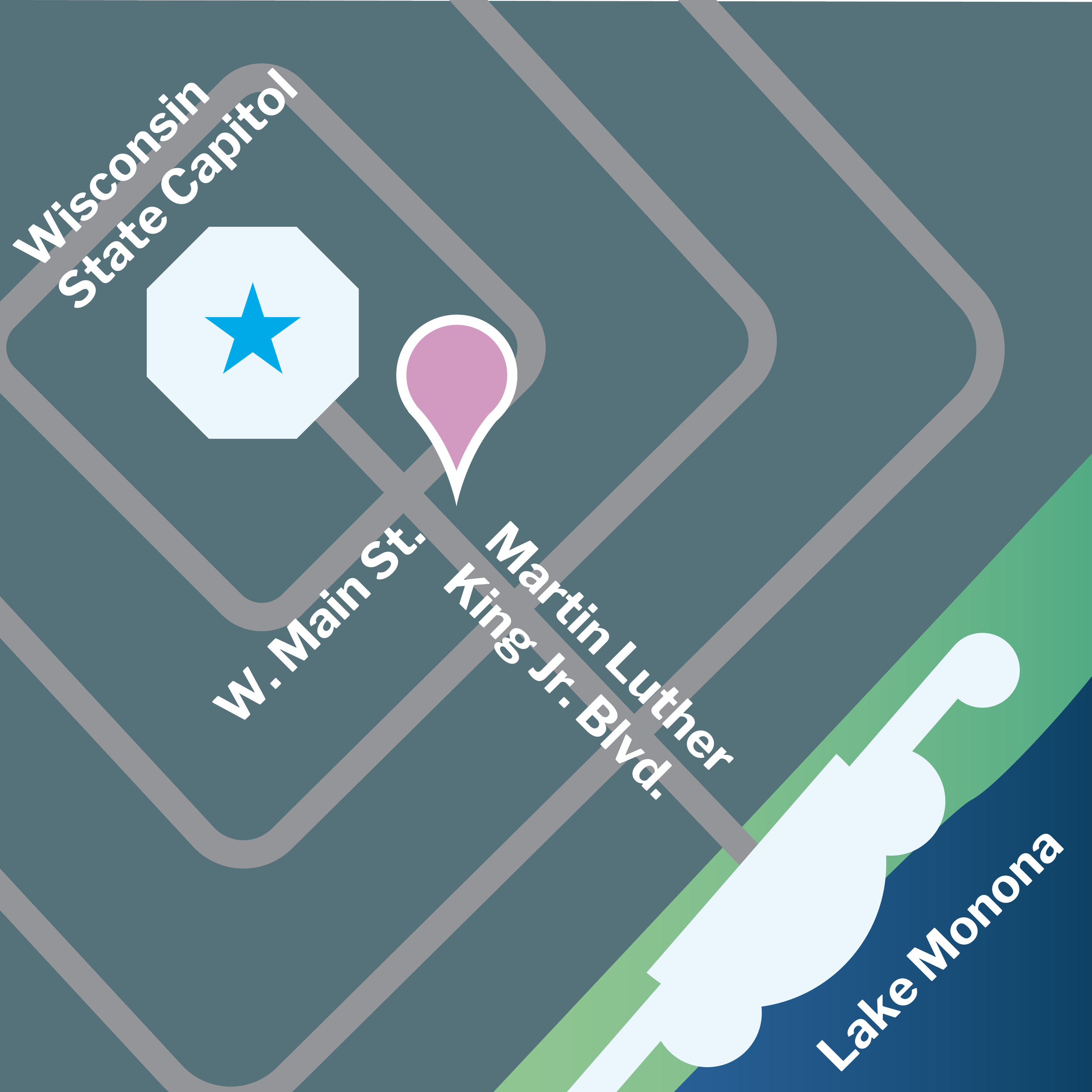
View map of art installation location
Installation spans two blocks on Martin Luther King Jr Blvd between E Wilson St and E Main St.