
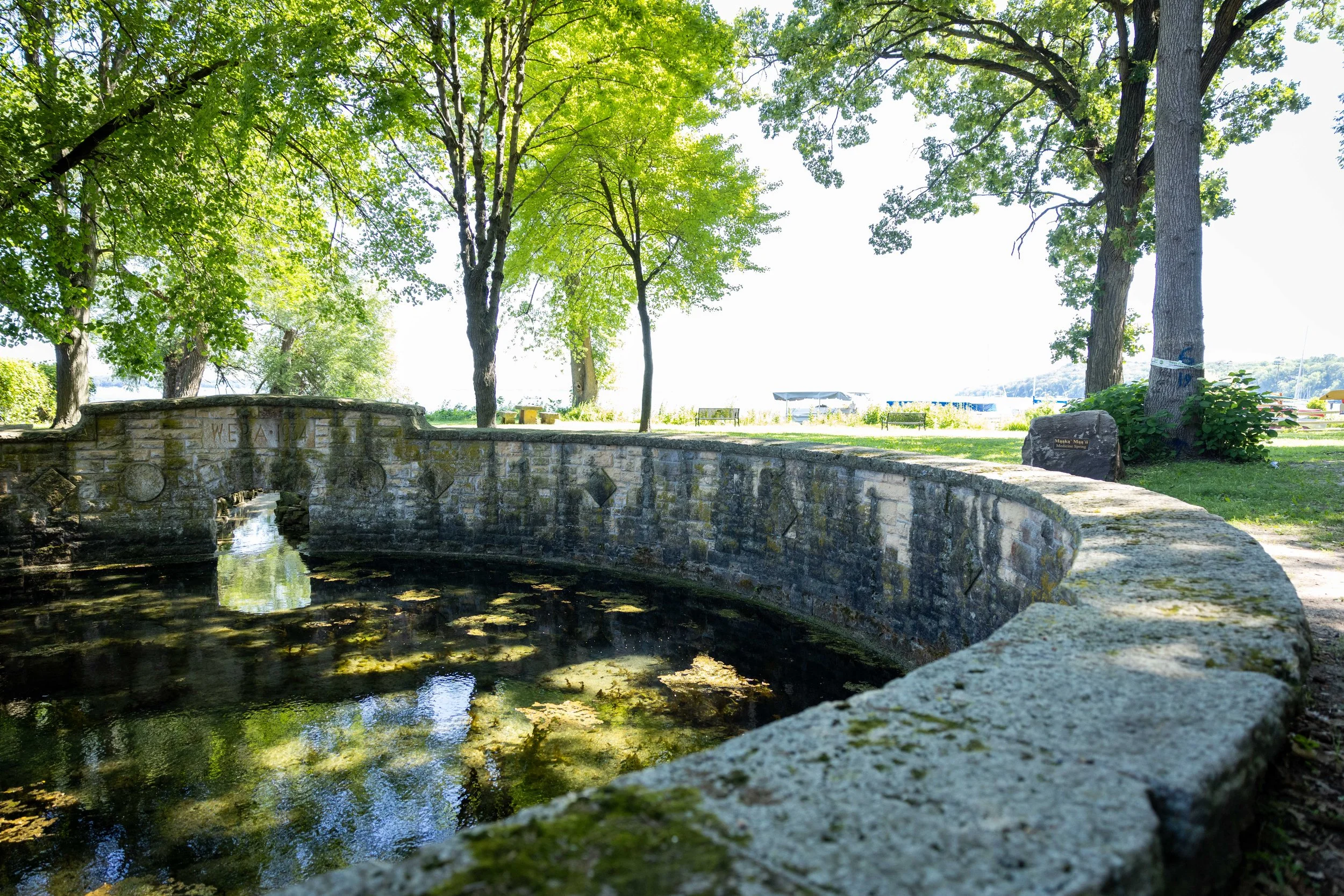
Like our ancestors, we cherish and respect the springs, lakes, and rivers as living beings.
Gene Delcourt (Abenaki, French, and Filipino), Dugout at Merrill Spring

MERRILL SPRINGS

Before the conquest of Teejop, Ho-Chunk people lived near its springs, lakes and rivers, whose waters they communicated with in various ways, and which they understood to be able to heal. Ho-Chunk people still value their relationship with these waters.
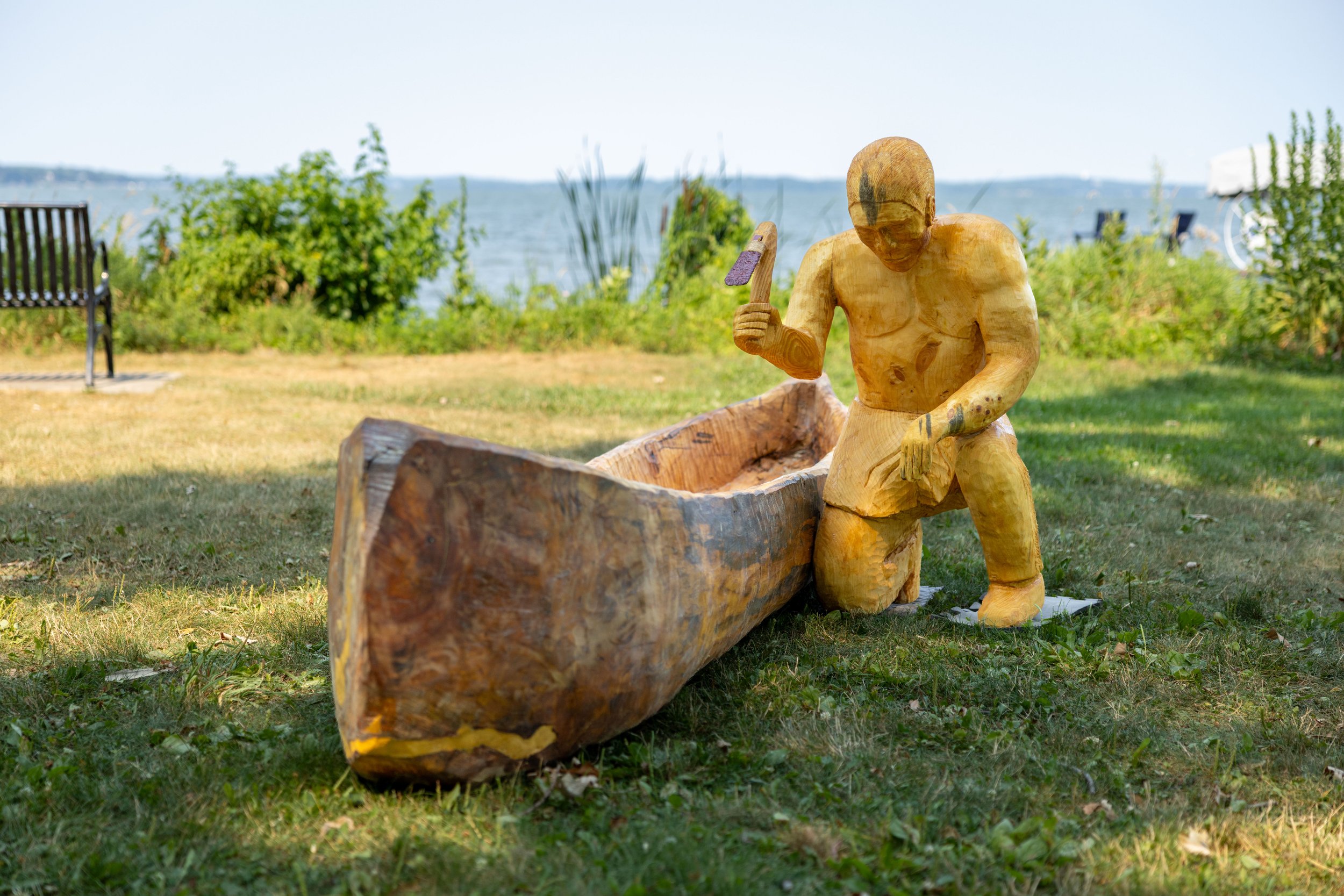
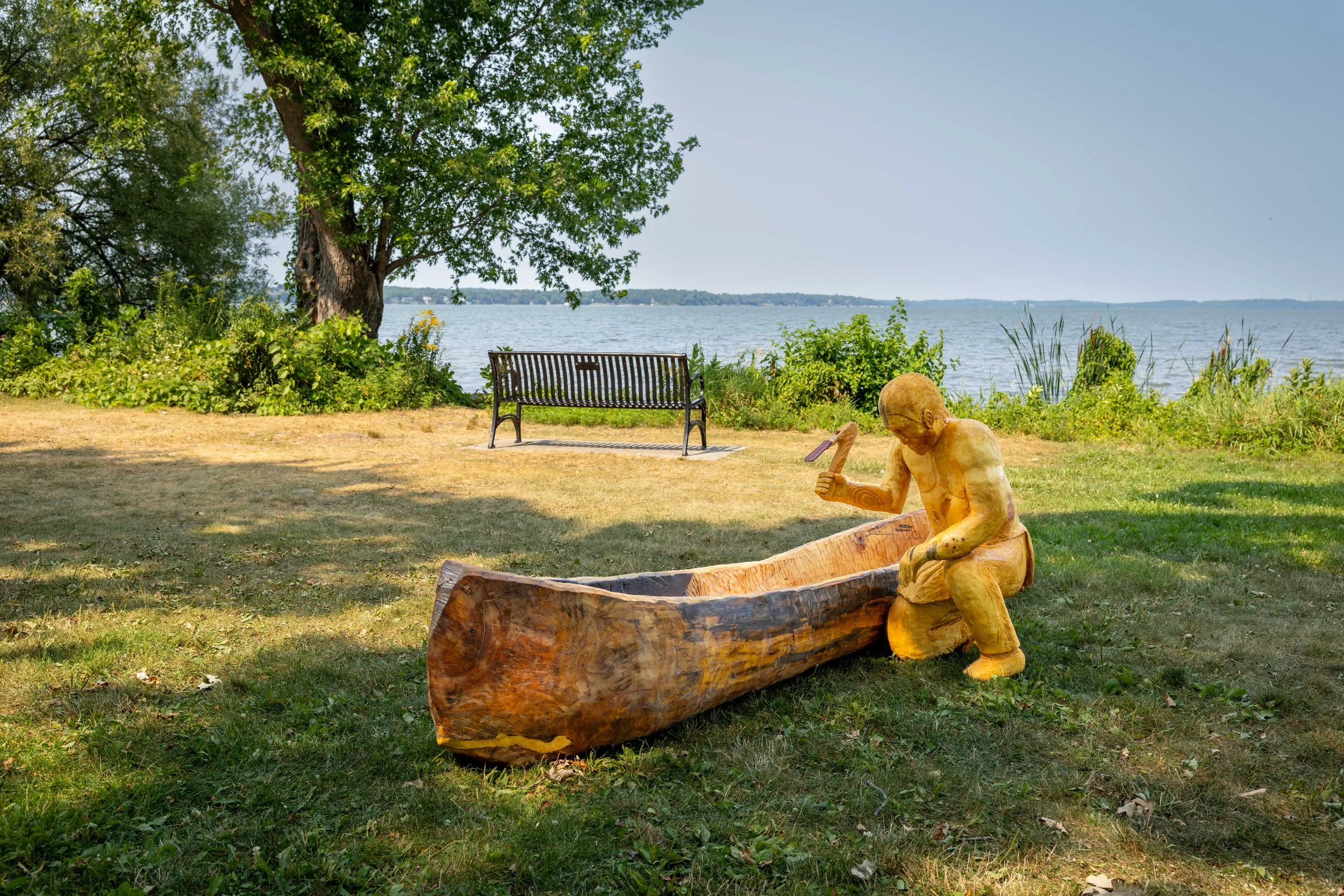
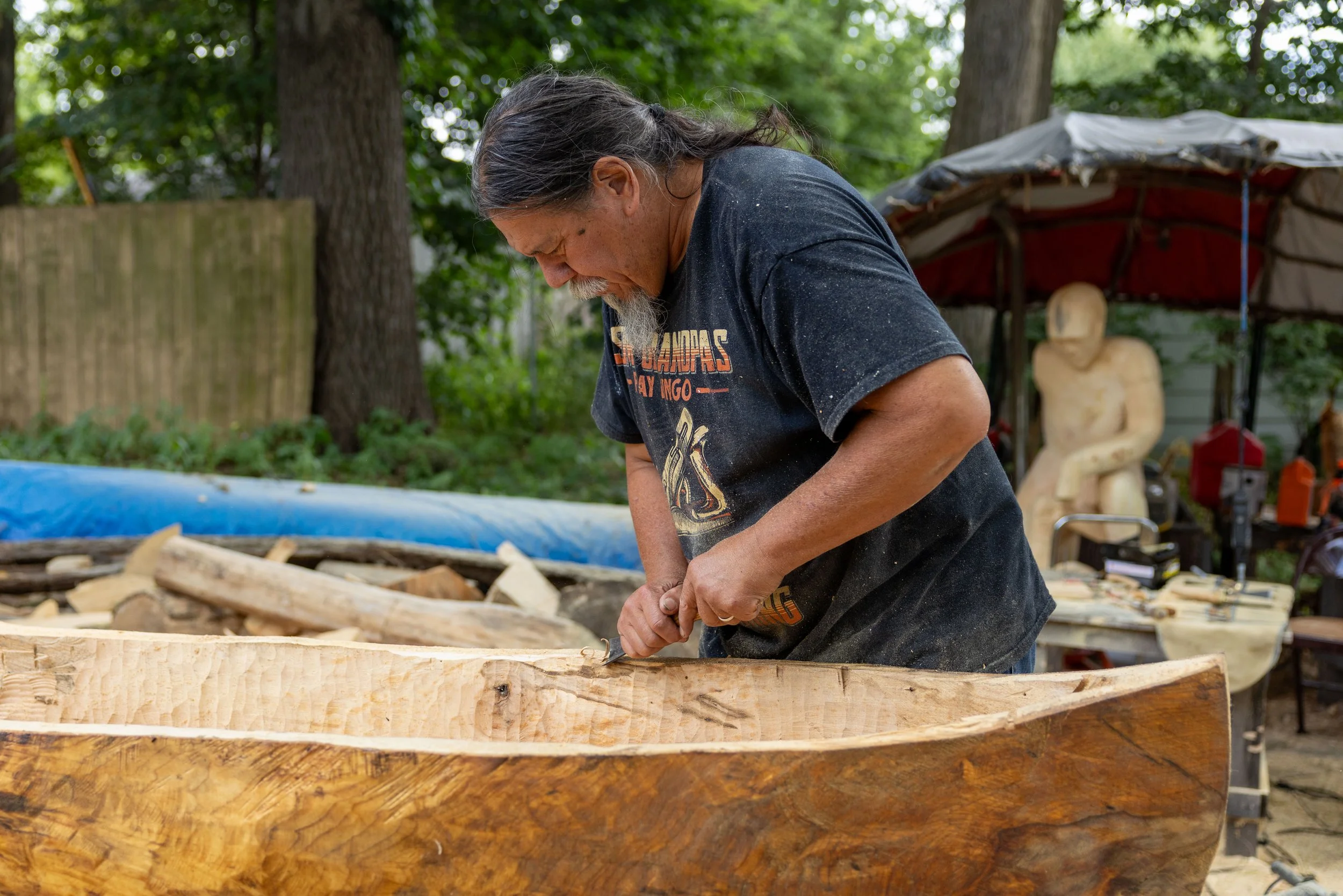
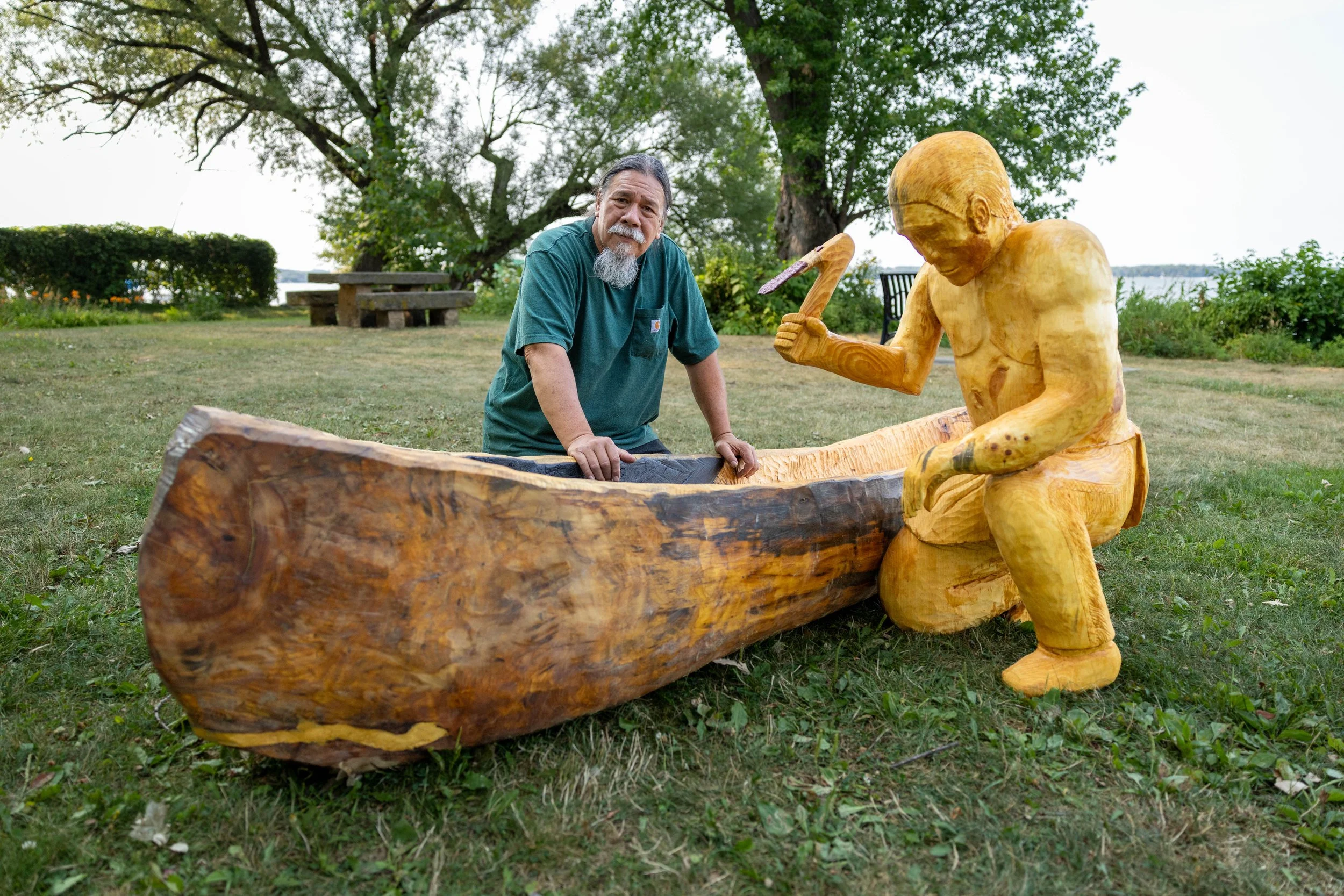
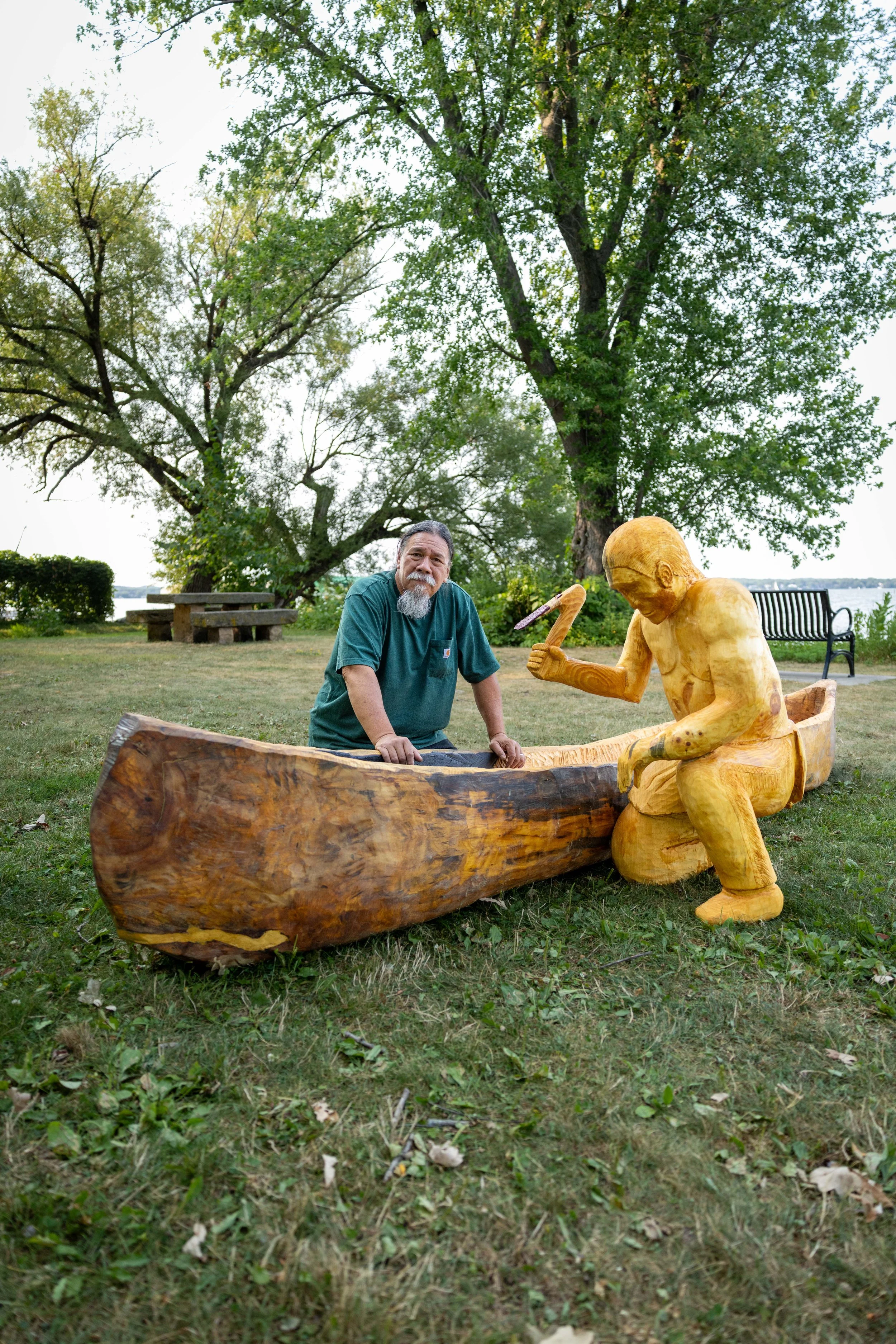
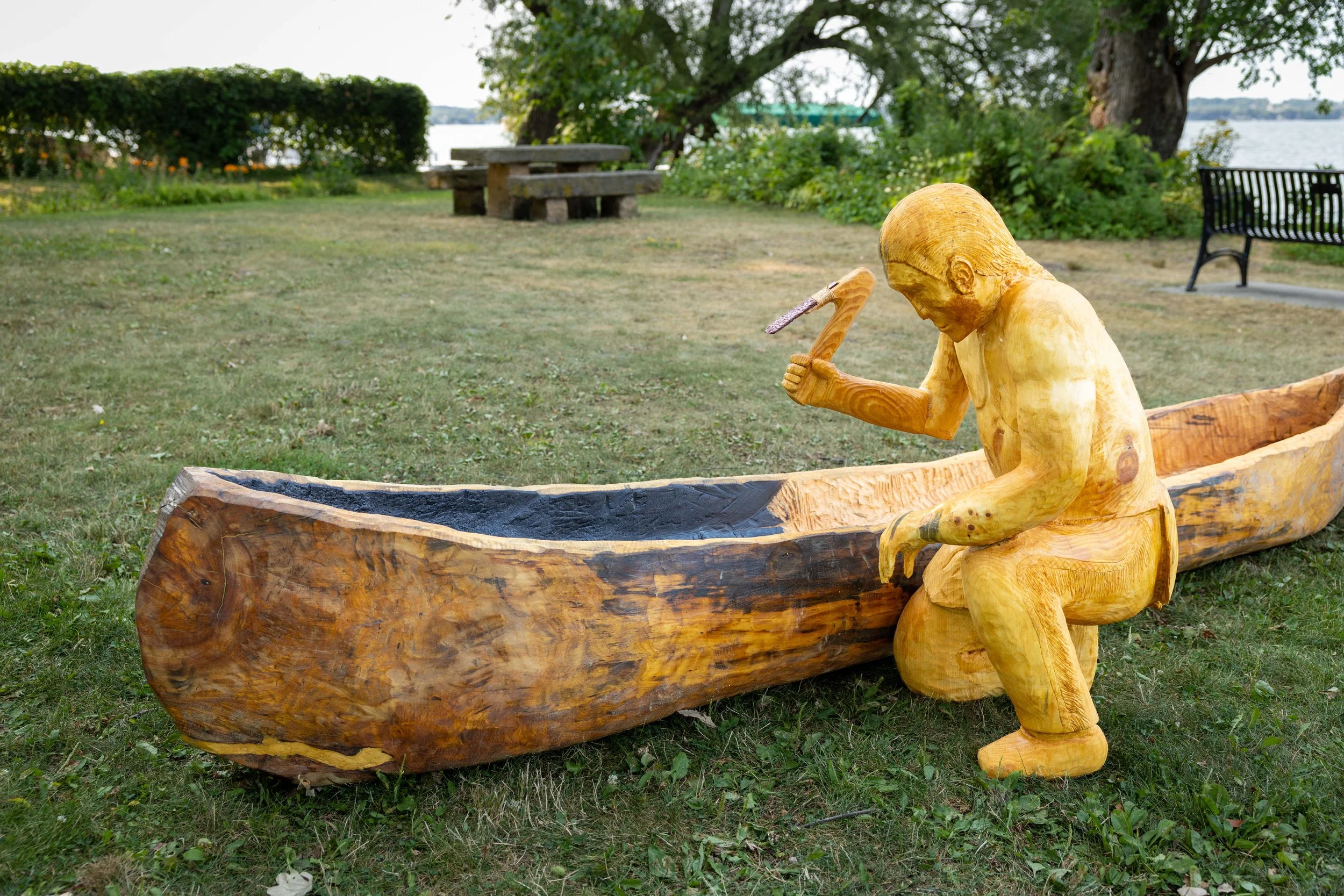
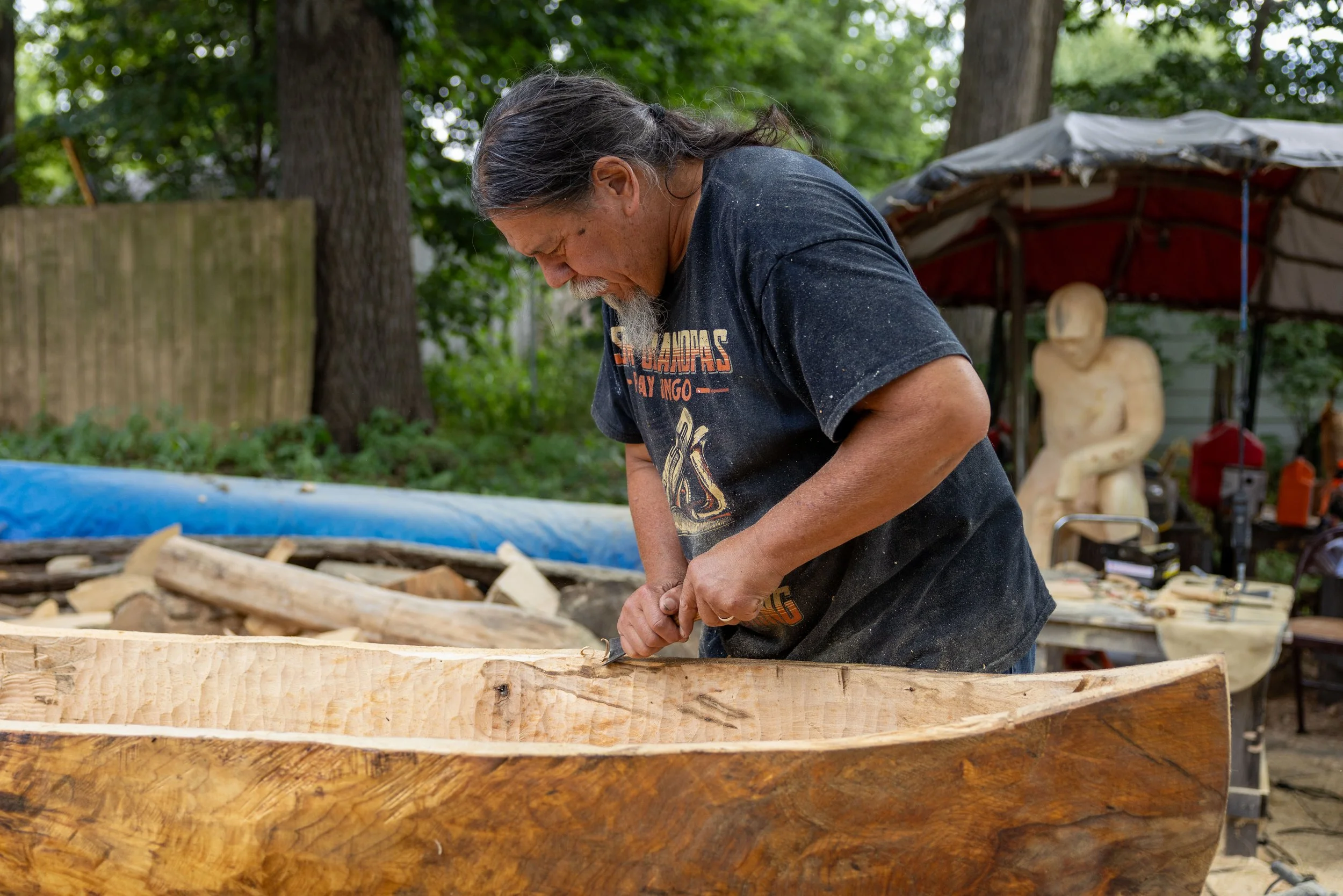
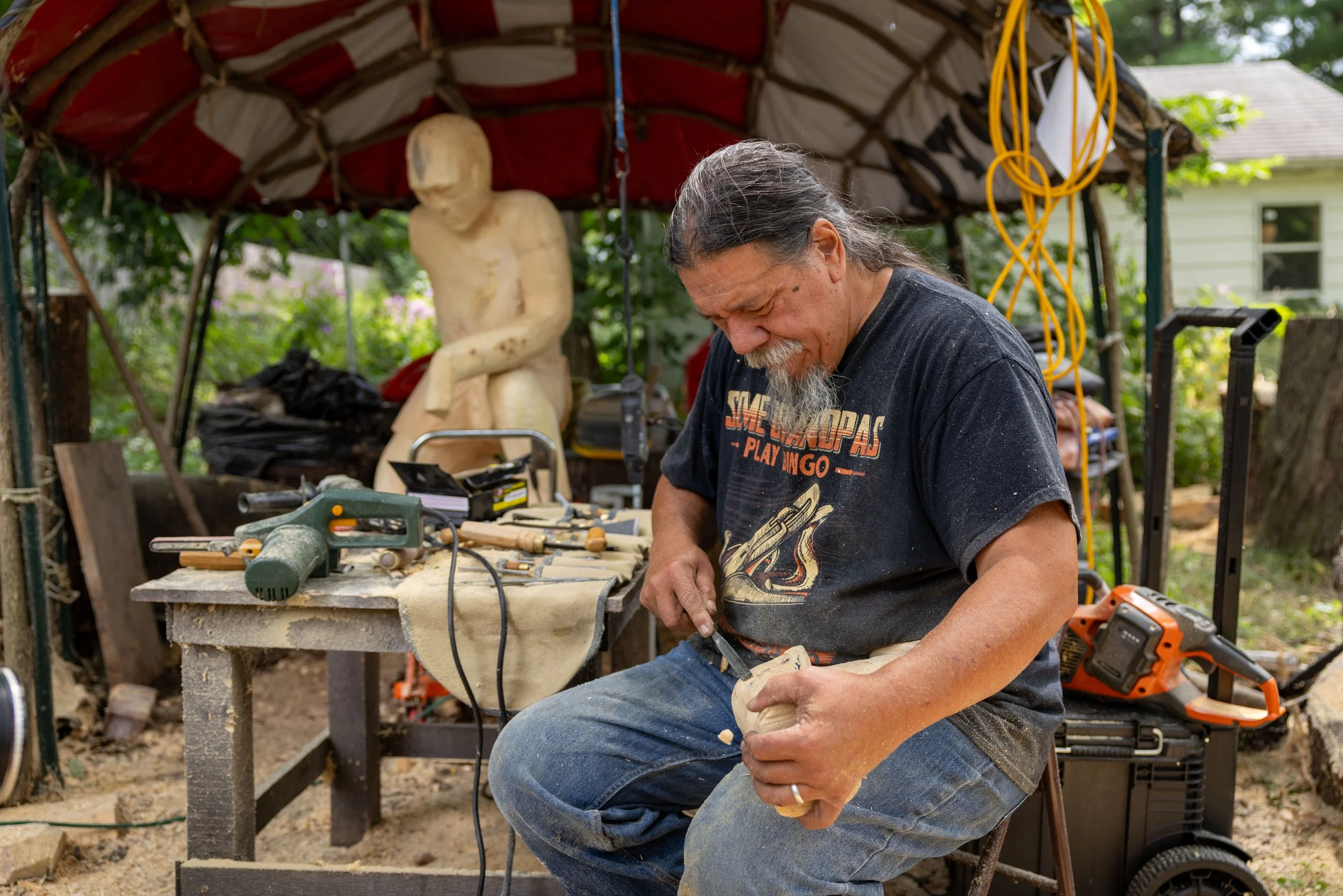

Delcourt’s sculpture, Dugout at Merrill Spring, depicts a Ho-Chunk man crafting a dugout canoe along the shore of Lake Mendota. The artist selected the Merrill Spring site because canoe-making was essential to travel, trade, and fishing, all central to daily life for the Ho-Chunk people. The work invites viewers to imagine the Ho-Chunk world before contact, and to witness a moment suspended in time as a craftsman shapes a canoe from a single log. The sculpture is life-sized, with a canoe approximately 15 feet long, half-carved from its original form.
Questions
What would it mean to understand water not just as a resource but as something to cherish and respect?
How have the springs, lakes, and rivers changed over time?
What experiences do you have with water in Teejop?